That stubborn smell isn’t just on surfaces—it’s hiding in caulk, grout, and toilet hinges where standard cleaners can’t reach. I’d start by removing your toilet seat and scrubbing underneath with a vinegar-water solution, then target the base with baking soda paste.
Deep-clean grout lines around the toilet, replace worn caulk, and treat drains with hot water and Dawn dish soap to break down uric acid crystals.
Enforce sitting-down bathroom habits to prevent future splatter. Keep up daily wiping and weekly deep-cleaning to maintain freshness—though there’s considerably more strategic detail worth exploring for stubborn cases.
Where Is That Urine Smell Coming From?
Where Is That Urine Smell Coming From?
Before you can tackle that stubborn bathroom odor, you’ve got to play detective. Urine smell rarely comes from just one spot—it hides in multiple locations.
Check Your Toilet Thoroughly
Inspect the seat hinge caps, the area above the seat, and below the tank. Don’t forget the lid and any bidet attachments where moisture collects.
Examine Surrounding Items
Rugs, bath mats, and decorative towels absorb urine odor like sponges. Even stools can trap scents.
Look at Storage
Garbage cans, extra toilet paper rolls, and supply caddies frequently hide spills. Check them carefully.
Inspect Fixtures
Shelves, plungers, and toilet scrubbers accumulate odors around joints and corners.
Consider Your Plumbing
A worn wax toilet bowl gasket traps scents and releases them gradually over time, causing persistent problems.

Crevice Cleaning Brush Tool: Microfiber brush head is thin and flat (5mm high), perfect for cleaning any hard-to-get tight crevice, narrow tiny corner

EASY CLEAN: Designed for your convenience, this toilet seat comes with hinges that easily release the seat for deeper cleanings; use gentle cleaners to preserve your finish
Durable rubber construction
Why Urine Odor Resists Standard Cleaning Methods
Why does that bathroom smell persist even after you’ve scrubbed everything? Here’s what’s happening: urine smells stubbornly because standard cleaning only tackles the surface. You’re facing a three-part problem.
Bathroom odors persist because standard cleaning only tackles the surface—you’re facing a three-part problem.
The Crystal Problem
Uric acid crystals embed themselves deep into porous materials—grout, carpet, baseboards. They’re like tiny odor factories hiding where your mop can’t reach. When moisture hits them, they release smell all over again.
Bacterial Breakdown
Bacteria actively break down urea and uric acid into ammonia, continuously generating new odor. Surface cleaners kill some bacteria, but they can’t penetrate deeply enough to stop the process completely.
Why Masking Fails
Air fresheners and scented cleaners simply cover smells temporarily—they don’t neutralize the actual compounds causing the problem.
You need solutions targeting multiple components simultaneously, not just surface-level fixes.

Fast and Effective: ACTIVE Seal & Grout Stain Remover is a Powerful Whitening Deep Cleaner. Mildew Stain Remover has an Instant Effect in Minutes to Quickly Clean Mold Stain and Eliminate Unwanted Musty Dirt and Grime

STAIN AND ODOR REMOVER: Clorox Urine Remover for Stains and Odors breaks down urine to eliminate odor, not mask it, while the powerful hydrogen peroxide cleaner removes stains

Simple & Easy to Use: wait 3-10 hours and rinse stains away without scrubbing required
Locate Urine Smell Sources: Seat Hinges, Gaskets, and Caulk
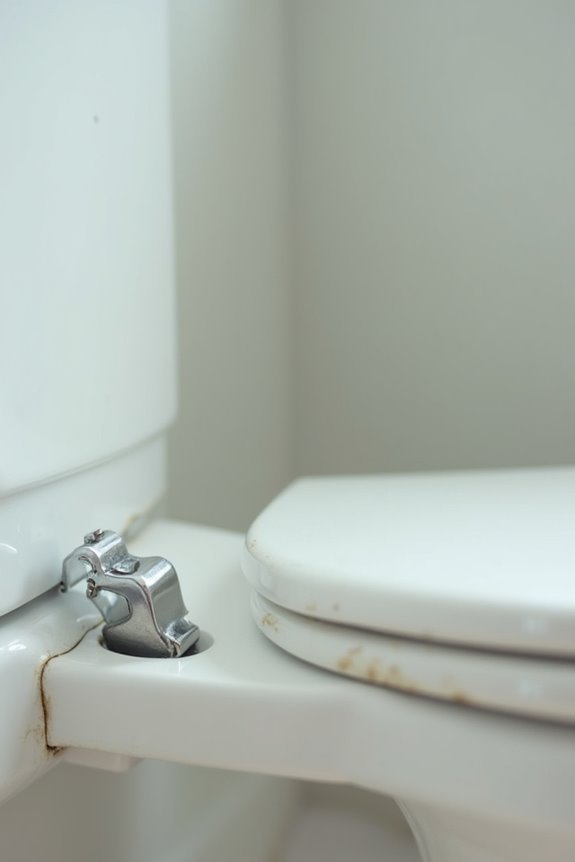
If you’ve scrubbed your toilet bowl until your arms ached but the smell lingers, the culprit isn’t where you’ve been looking—it’s hiding in the toilet seat hinges, gasket seals, and caulk lines where urine splashes accumulate and crystalize over time. These spots trap uric acid and bacteria that standard cleaners can’t reach, so they keep releasing that stubborn odor even after you’ve sanitized everything else. Before you replace your whole toilet, inspect these hidden areas closely, because addressing them often solves the problem that’s been bothering you.
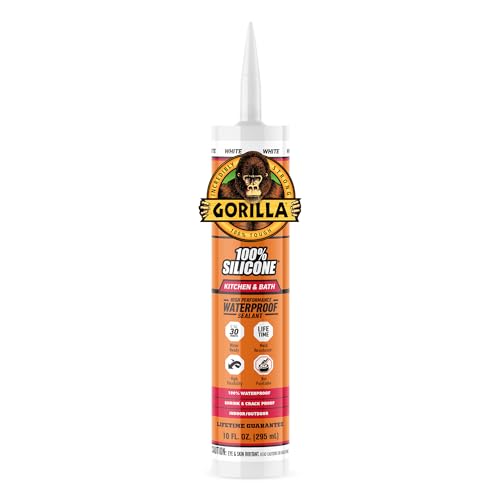
Kitchen & Bath Ready – Premium white silicone caulk formulated for kitchens and bathrooms, delivering a durable, long-lasting seal in wet, humid environments

Waterproof sealant: This white caulk seals out air, water, and moisture with 100% silicone as cured

TMS Acoustical Caulk provides impressive soundproofing, significantly reducing noise transmission through walls, ceilings, and floors.
Toilet Seat Components
Where does that stubborn bathroom odor actually hide? I’ve discovered the culprit isn’t always obvious. Those hinge caps and the area directly above your toilet seat trap urine stench like tiny sponges. The space beneath your tank collects residue you can’t see but definitely smell.
What I Check First:
- Hinge caps for accumulated grime
- The seat’s underside where leaks settle
- Caulk seams around the toilet base
I learned that deteriorated caulk becomes an odor reservoir, requiring replacement. The wax ring beneath your toilet also matters—a worn seal lets urine odors migrate into surrounding areas, intensifying the problem.
My Solution:
Remove your toilet seat completely. This reveals hidden buildup on hinges and underneath. Consider upgrading to metal or sealed seats that resist odor absorption better than older plastic options.
Hidden Gasket Areas
Just how thoroughly have you actually cleaned beneath your toilet seat? I’ll admit I hadn’t until I discovered where stubborn odors really hide.
The gasket areas—those rubber seals around hinges and below the tank—trap urine residue that surface cleaning completely misses. Here’s what I do now:
Cleaning Strategy:
- Remove the toilet seat by unscrewing hinges
- Scrub hinge caps and underneath edges with a brush
- Target the wax bowl gasket with baking soda paste
- Wipe above the seat and below the tank thoroughly
These crevices accumulate invisible urine deposits that cause persistent stink. Reaching these gasket areas eliminated odors my regular cleaning never touched.
After scrubbing, I test problem zones again. Vinegar solutions work well for lingering smells in tight spaces.
Deep Clean the Toilet Inside and Out
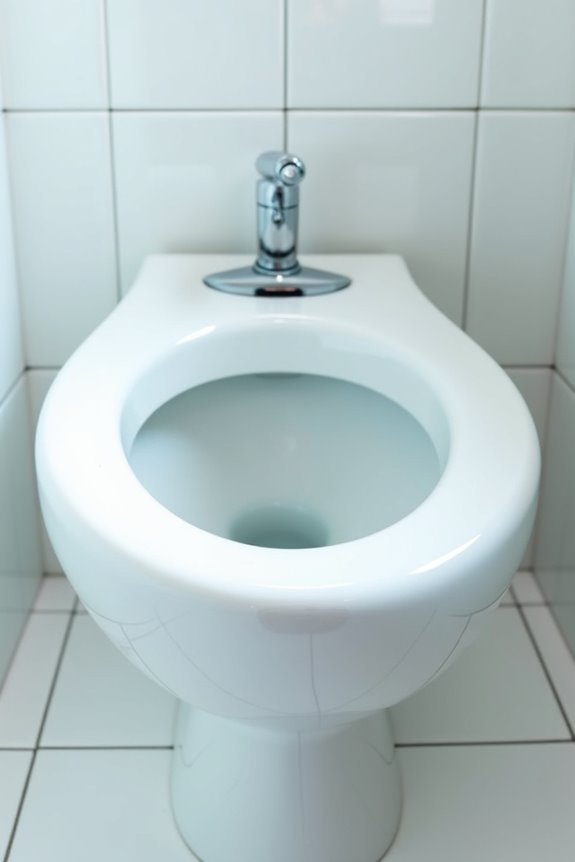
Since the toilet’s where most bathroom odors hide, tackling it thoroughly makes a real difference in freshening up your whole space. I’ve found that removing the toilet seat entirely lets me scrub every crevice—hinges, underside, exterior—with bleach-based cleaner or warm soapy water. Don’t skip the rim and bowl lip; urine smell often lingers there stubbornly.
Removing the toilet seat entirely lets you scrub every crevice—hinges, underside, exterior—to eliminate stubborn urine odors where they hide.
Deep Cleaning Steps:
- Use a dedicated toilet cleaner or vinegar solution to dissolve mineral buildup and uric acid residues
- Scrub aggressively, then repeat if needed for persistent odors
- Rinse thoroughly to eliminate soap residue
After cleaning, I dry all surfaces completely. This prevents moisture from trapping additional odors. If you’re dealing with stubborn urine smell that won’t quit, vinegar’s acidity really cuts through what regular cleaners miss.

Quickly Removes Rust, Dissolves Organic Stains And Cleans Hard Water Residue

【EFFICINET CLEANING】Laiyeoy pumice stone for toilet cleaning can easily and thoroughly clean the toilet, removing hard water stains and limescale, keeping your toilet clean and hygienic.

Quickly Removes Rust, Dissolves Organic Stains And Cleans Hard Water Residue
Scrub Tile and Grout Around the Toilet Base
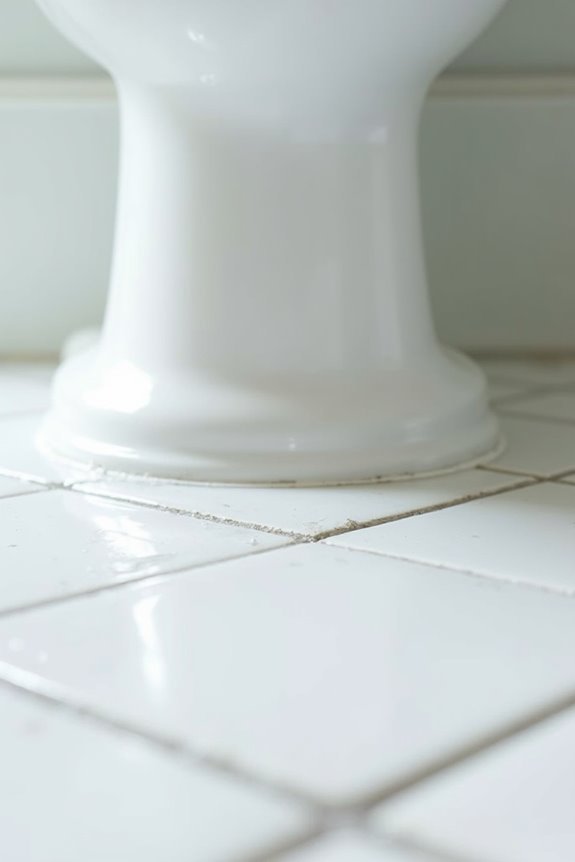
While you’ve got the toilet sparkling clean, the real culprit hiding nearby is often the grout and tile surrounding its base.
Urine smell lingers in porous grout lines long after the bowl’s spotless. Here’s what works:
Vinegar-Water Solution
Mix equal parts white vinegar and warm water. Scrub the tile and grout with a stiff brush, working the solution deep into cracks where urine residues embed themselves.
Baking Soda Paste
Create a thick paste with baking soda and water. Apply it directly to grout lines, let it sit for 15 minutes, then scrub and rinse thoroughly. This neutralizes odors at their source.
Don’t Forget Behind
Remove the toilet seat and hinges. Clean underneath and behind the base—spills seep into gaps you can’t see, trapping that stubborn urine smell.

DRAIN CLOG REMOVER: This Liquid-Plumr Pro-Strength Clog Destroyer Gel is fortified with 3X action to protect, prevent and destroy clogs; Packaging may vary

Stop The Stink: Clean and freshen any drain in your home with quick deodorizing tablets. The unique fizzing and fragrance technology helps eliminate foul drain odors and boosts fragrance to freshen the room.

ENZYME ENHANCED FORMULA: Green Gobbler Enzymatic Drain & Grease Trap Cleaner uses an enzyme enhanced formula to clear buildup and remove odors in grease traps, septic tanks and similar plumbing systems. It helps digests oils, fats, grease, sludge and other food waste within hours of application. This bottle uses anti-glug technology to help reduce splashing and provides up to eight treatments.
Mop Floors and Drain Deep to Eliminate Urine Smell
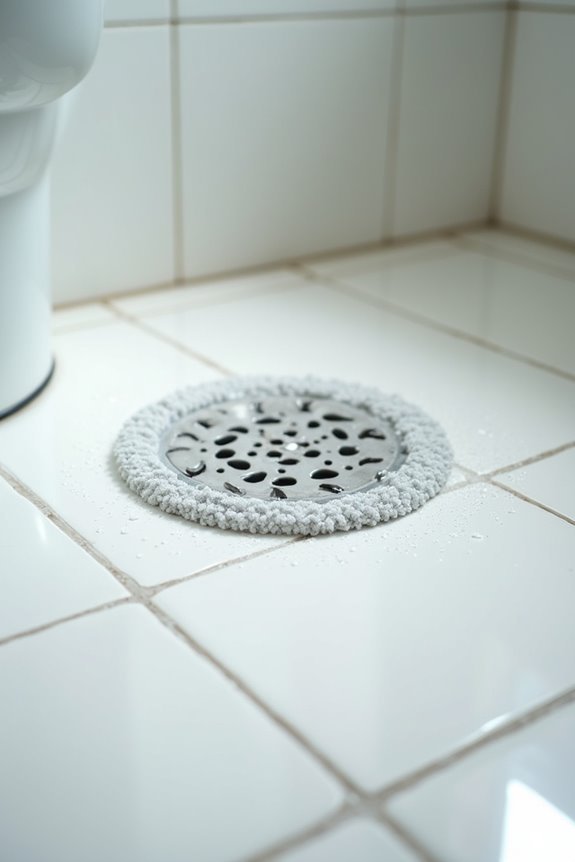
Once you’ve tackled the grout and caulk, hitting the floors and drains will help eliminate that stubborn urine smell. You’ll want to remove the floor area around the toilet, sweep or Swiffer to gather dirt, then mop thoroughly with clean water to remove any soapy residue that can trap odors. At the same time, address the drain—pull out hair from the catcher, flush it with near-boiling water mixed with Dawn dish soap, or use a label-recommended drain declogger to clear out the source of smell lurking below.

🔩 【Premium Chrome-Plated Metal】Crafted from solid zinc alloy with advanced chrome plating, these hinges resist rust, corrosion, and daily wear. Includes stainless steel screws that won’t strip or break during installation.
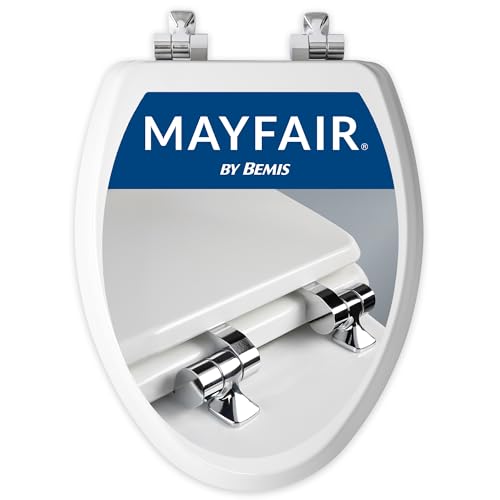
DECORATIVE CHROME HINGES: Stylish seat with a metal hinge in a modern chrome finish that complements your bathroom décor or hardware beautifully; this seat adds practical functionality while elevating the look of your space

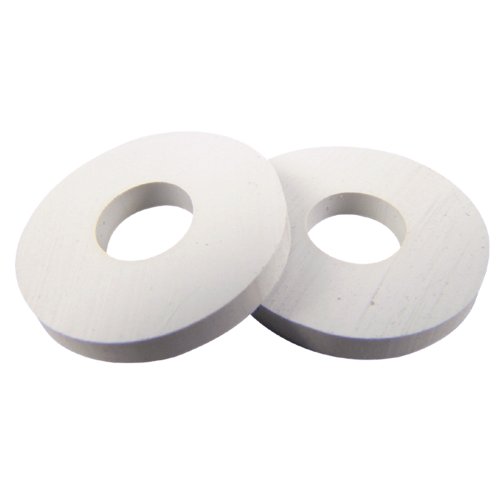
Includes 4 washers
Floor Preparation and Sweeping
Floor Preparation and Sweeping
To eliminate urine smell rather than just mask it, you need to start with a clean slate—and that means preparing your bathroom floor properly.
Clear the Space
First, remove everything from the floor: trash cans, bath mats, and stray items. These objects trap odors underneath, making your urine smell problem worse.
Sweep Thoroughly
Next, sweep or Swiffer the entire floor, paying close attention to grout lines and around the toilet base. Dust and hair harbor bacteria that intensify odors. Take your time with this step—it’s foundational.
Focus on Problem Areas
Pay attention to the toilet’s perimeter, where urine splashes accumulate invisibly. These spots are odor hotspots that sweeping alone won’t fully address, but it removes loose debris before mopping.
Drain Cleaning and Maintenance
Deep-Clean Your Drains
Start by removing hair from your drain catcher—I know it’s gross, but this step matters. Flush the drain with near-boiling water mixed with Dawn dish soap. The heat breaks down uric acid crystals clinging to pipes.
Address Problem Areas
Don’t forget the caulk between your floor and toilet. Urea crystals hide in these porous joints, creating stubborn urine smell that regular cleaning misses. Scrub this area thoroughly with a disinfectant, working the solution into every crevice.
Once you’ve finished, you’ll notice the difference immediately—that lingering odor fades when you eliminate these hidden sources.
Use Vinegar and Baking Soda for Natural Odor Neutralization
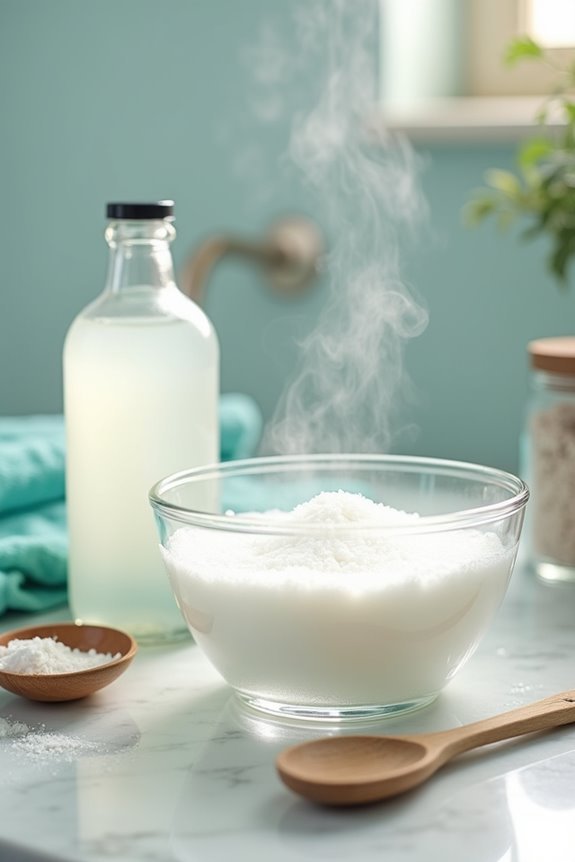
Why do vinegar and baking soda work so well together? They’re a powerhouse duo—baking soda absorbs odors while vinegar neutralizes them chemically. This combination tackles bathroom smells effectively.
The Two-Step Process
First, make a baking soda paste and apply it directly to caulk, tile grout, and the toilet base where urine odors hide. Let it sit, drawing out embedded smells. Next, spray a 50/50 vinegar and water solution over the paste. The reaction amplifies odor control considerably.
For Stubborn Situations
When odors persist, mix 2 gallons hot water with 1/4 cup vinegar and 1/4 cup baking soda, applying this solution across tile and linoleum surfaces. After spraying, rinse thoroughly to maximize results.
This natural approach works because both ingredients neutralize rather than mask—you’re actually eliminating the problem, not hiding it.

STAIN AND UNWANTED SMELL REMOVER: Clorox Urine Remover for Stains and Unwanted smell breaks down urine to eliminate Unwanted smell, not mask it, while the powerful hydrogen peroxide cleaner removes stains

Acid-free grout cleaner – Safely cleans grout without harsh acids. Will not degrade grout or damage tile, marble, granite, or natural stone surfaces.

DESTROYS MOLD, MILDEW AND SOAP SCUM BUILDUP: This bleach spray cleans and whitens bathroom surfaces in seconds.
When Natural Remedies Fail: Why Odorcide Works Differently
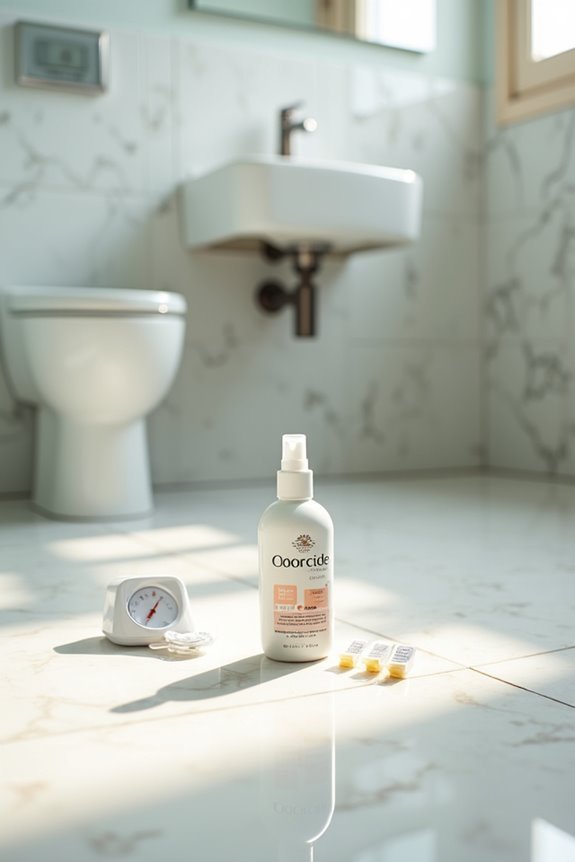
Sometimes those vinegar and baking soda solutions just don’t cut it, especially when you’re dealing with stubborn urine odors that keep coming back no matter how hard you scrub. I’ve been there, frustrated after multiple attempts with pantry staples that didn’t fully eliminate the problem.
That’s where Odorcide works differently. Unlike surface cleaners, it penetrates deep to neutralize uric acid crystals—the stubborn culprits other products miss. You saturate the affected area with 8 ounces per gallon of solution, and it targets every odor component at the source.
What sets Odorcide apart is its reactivation protection. If accidents happen again, it stops new odors before they settle in. You’re not just masking smells; you’re actually eliminating them.

MADE IN THE USA: OB1 is a universal superior contractor grade all-purpose adhesive & sealant, that can be applied on WET, DAMP or DRY surfaces, is paintable in 1 hour & is MADE right here IN THE USA!
![[2 Pack] RV Roof Sealant – [10 oz] Professional Self-Leveling Lap Caulk for Roof Leak Repair, Crack Sealing, UV & Weather Resistant, Easy Application White Sealant for RV, Camper, Trailer, Motorhome](https://m.media-amazon.com/images/I/51WbEi7sPrL._SL500_.jpg)
Long-Lasting Waterproof Protection - This RV roof sealant is specially formulated to provide a durable, watertight seal. It’s self-leveling, making it perfect for horizontal surfaces and ensuring even coverage without the hassle.
Apply Odorcide for Immediate and Lasting Odor Elimination
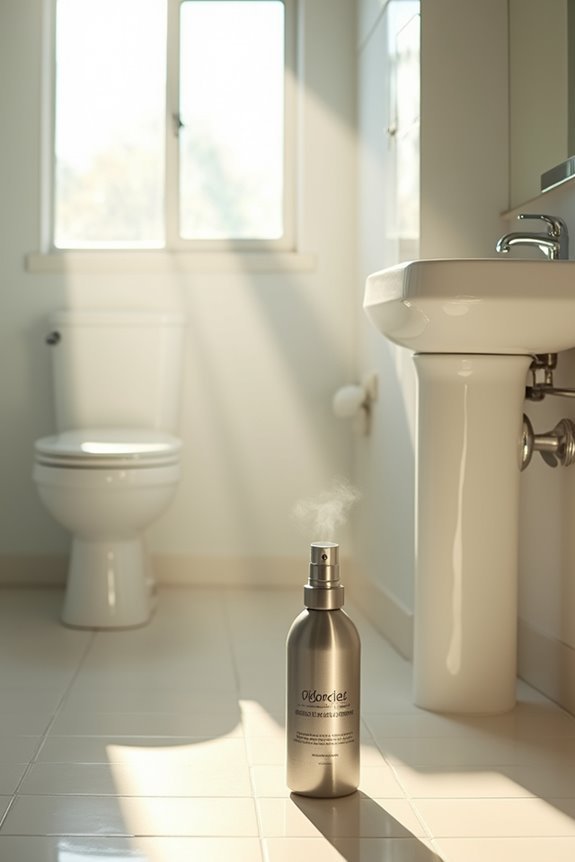
Now that you know Odorcide tackles odors differently than standard cleaners, it’s time to put it to work in your bathroom.
Here’s how to apply it:
- Saturate problem areas with Odorcide at 8 ounces per gallon of cleaning solution
- Let it penetrate deeply into tiles, grout, and fixtures where urine odors hide
- Reapply if needed for stubborn, old odors that won’t quit
Odorcide works where enzymes fail. You’re not masking anything—you’re neutralizing uric acid crystals at their source. Most applications eliminate odors completely, and it’s safe around your family and pets.
This isn’t just a quick application; it’s prevention too. Once treated, your bathroom stays fresher longer.

URIC ACID CLEANSE & SUPPORT: Designed to support the body’s natural uric acid cleanse while promoting healthy uric acid balance, joint comfort, flexibility, and everyday mobility.
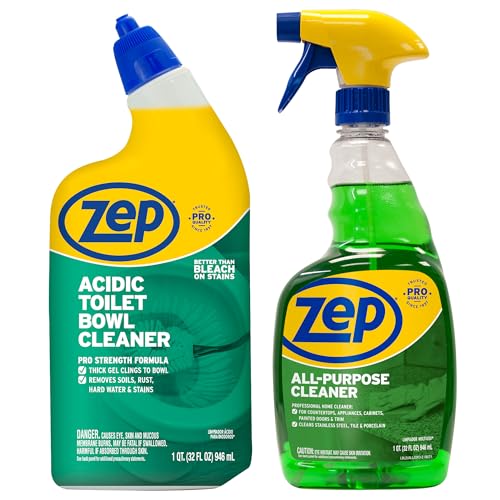
Powerful Bowl Cleaning: Zep Acidic Toilet Bowl Cleaner uses a thick gel formula that clings to the bowl to remove soils, rust, hard water stains, and mineral deposits.
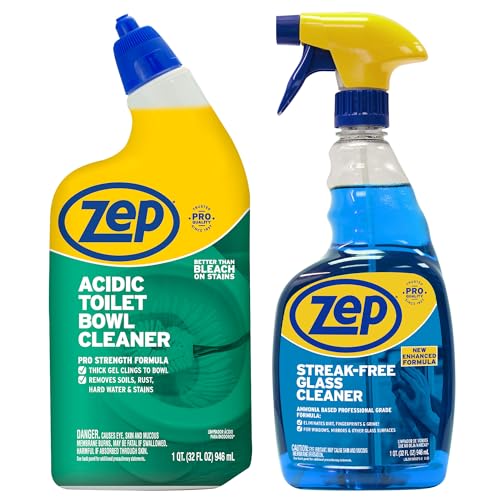
Tough Bowl Stain Removal: Zep Acidic Toilet Bowl Cleaner uses a pro-strength clinging gel to remove soils, rust, hard water stains, and mineral deposits.
Replace Toilet Seat and Wax Ring if Odors Persist
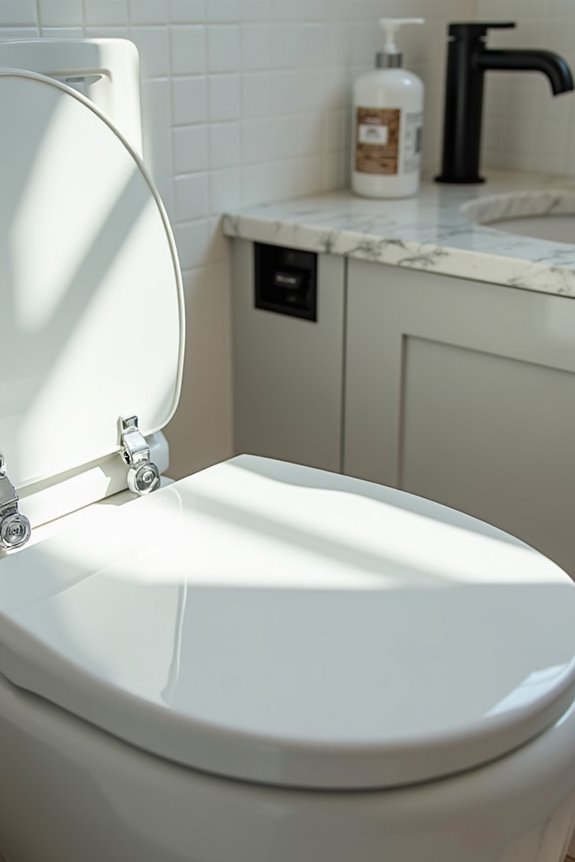
When Odorcide’s done its job and lingering smells still won’t budge, it’s time to look closer at what’s hiding underneath your toilet. Urine accumulates in places you can’t see—under the toilet seat hinges and around the wax ring seal beneath the bowl.
Remove and Inspect
Start by removing your toilet seat. Check those hinges carefully; they’re odor traps. If the wax ring (that rubber seal connecting bowl to floor) has deteriorated, it’s allowing fumes to escape into your bathroom.
Replace with Better Materials
A newer, non-porous toilet seat prevents odor from settling into joints. Pair this with a fresh wax ring, then reinstall everything securely to eliminate gaps where smells seep through.
This combination tackles the problem at its source.

PREVENT FOUL ODORS: One Green Gobbler Drain Stick will help remove organic matter that can be the starting point for stinky odors and clogs. It works hard to deodorize pipes and attacks grease, food, fats, oils and scum that cause slow-moving drains.

Prevent Drain clogs & Bad Odors: Our enzyme drain cleaner sticks actively break down grease, food scraps, oil, hair, and soap scumhelping prevent drain blockage and eliminate foul smells from kitchen and bathroom sinks.

TRUSTED BRAND: Drano has been used and trusted for generations. Avoid spending money on a plumber, and use Drano once a month for drain maintenance and clog prevention.
Ventilate After Cleaning to Lock in Freshness
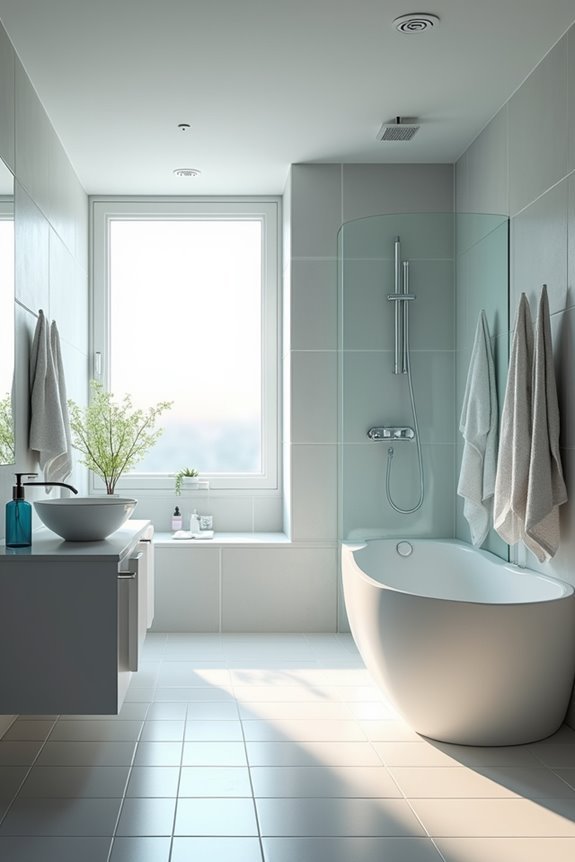
Once you’ve replaced your toilet seat and wax ring, you’ve tackled the hidden sources of odor—but your work isn’t quite finished. Now comes the ventilation phase, which significantly improves the freshness you’ve worked hard to achieve.
Here’s what I recommend:
- Run your exhaust fan during and after cleaning to remove airborne odor molecules more effectively than simply cracking a door
- Keep doors closed for 15–30 minutes post-cleaning to prevent new odors from sneaking back in
- Maintain airflow for at least 30 minutes afterward to reduce humidity and solidify your results
Pair ventilation with temporary odor absorbers like Odorcide to prevent scents from rebounding while surfaces dry. Regular ventilation after each cleaning maintains that consistently fresh bathroom environment you’re seeking.
Enforce Sitting-Down Bathroom Habits to Prevent Accidents
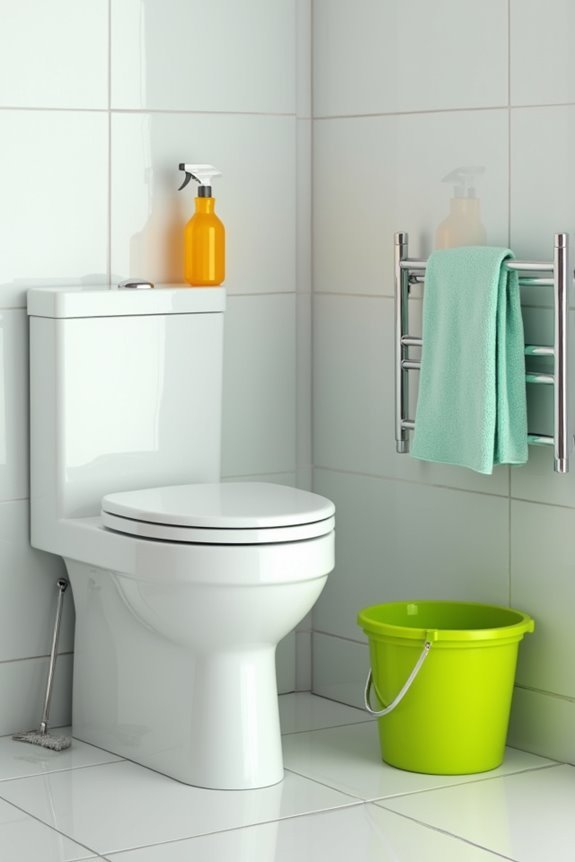
I’ve found that establishing a household rule where everyone sits to pee—at least at home—cuts down on splashes and the odors that come with them. You’ll want to monitor younger children closely during this shift, reminding them gently each time they use the bathroom until the habit sticks by default. When everyone follows this practice consistently, you’re preventing those hidden accidents that accumulate under the rim and in grout, making your whole cleaning routine far more effective.
Establish Consistent Sitting Rules
Since bathroom habits directly shape how urine lands—and where it sticks—enforcing a sit-down rule for all bathroom users is one of the most effective ways to reduce odor at its source.
Here’s what works:
- Announce the rule clearly so everyone understands why sitting matters for your shared space
- Model the behavior yourself to show you’re committed, not just directing others
- Post a gentle reminder near the toilet without shaming anyone
When I implemented this in my home, the urine smell noticeably decreased within days. Adults and boys sitting down dramatically cuts splatter and deposits on the rim and floor. You’re not being fussy—you’re protecting your bathroom environment. Consistency builds the habit, and soon it becomes automatic. Your household will benefit from the cleaner, fresher space you’ve all created together.
Monitor Young Children Closely
Monitor Young Children Closely
While establishing household sitting rules works well for older kids and adults, young children need a different approach—they’re still learning body control and don’t always have the coordination to sit reliably or aim accurately. Close supervision during bathroom visits reduces accidents that create stubborn urine smell.
Stay Present During Bathroom Time
I position myself nearby while my youngest uses the toilet, offering gentle reminders about positioning and wiping. This prevents the missed urination that commonly causes bathroom odors. I also keep cleanup supplies within arm’s reach—paper towels and enzymatic cleaners—so I can address any accidents immediately.
Create a Comfortable Routine
Making bathroom visits predictable helps. I encourage frequent trips before bed and after meals, reducing the likelihood of desperate situations that lead to splashing or accidents that embed that persistent urine smell deeper into surfaces.
Reinforce Proper Toilet Technique
One of the most effective ways to eliminate urine smell is to establish sitting-down bathroom habits for everyone in your home, especially boys and men.
Here’s what works:
- Model the behavior yourself – When family members see adults sitting down consistently, they’re more likely to follow suit
- Set clear expectations – Make it a household rule with gentle reminders and accountability for cleanup
- Reward compliance – Acknowledge when people remember without prompting
This shift reduces splatter and urine contact with surfaces. When everyone sits, the bathroom stays fresher longer. Pair this habit with immediate post-use cleaning using a vinegar-water spray, and you’ll address urine smell at its source. It’s straightforward and requires consistency.
Build Daily Habits to Keep Odors From Returning
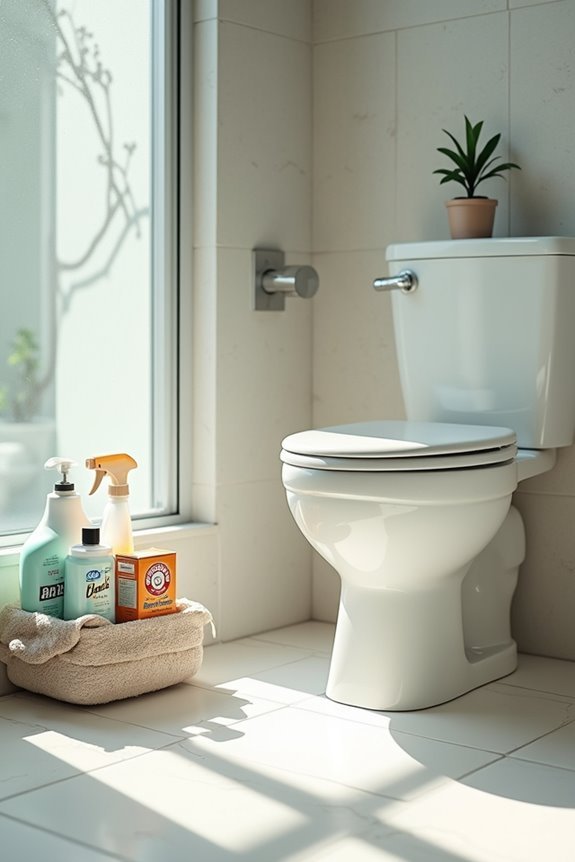
How’d you let that bathroom smell creep back in after all your hard work?
Life happens. But here’s what I’ve learned: staying ahead of urine smell requires consistent daily habits, not just occasional deep cleans.
Your Daily Routine
I wipe down surfaces and sweep floors every single day. This prevents residue from accumulating underneath. I’ve also adopted sitting to pee for everyone in my household, which dramatically reduces splatter.
The Weekly Commitment
Once weekly, I deep-clean drains, grout, and under the toilet—those hidden spots where odors hide. I launder bathroom mats and towels regularly too.
The Real Secret
Accountability matters. When everyone participates in prevention, the urine smell stays gone. It’s not glamorous work, but it’s effective.
Reseal Caulk and Paint for Long-Term Protection
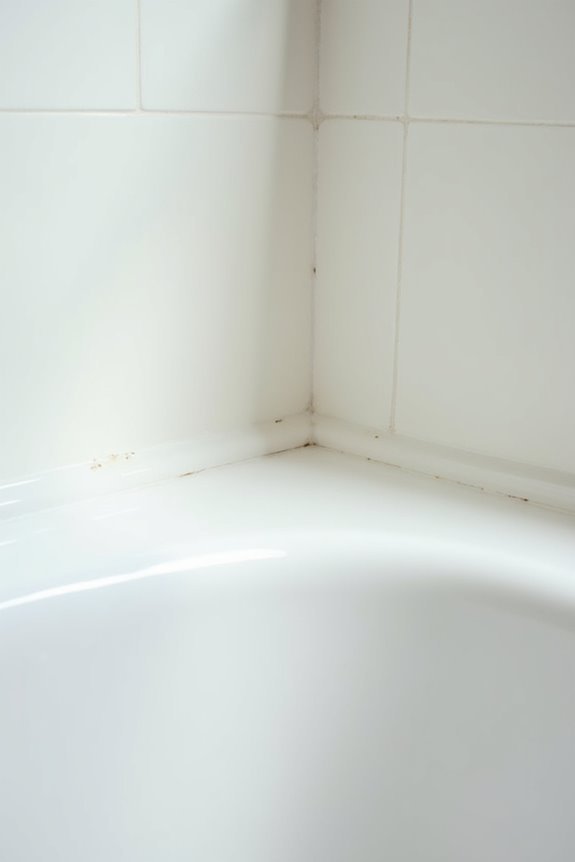
Reseal Caulk and Paint for Long-Term Protection
After you’ve cleaned everything spotless, there’s one thing most people forget: sealing the gaps where urine sneaks in and hides.
The Three-Step Seal
- Remove old caulk completely, then clean and dry the area thoroughly
- Apply mold- and mildew-resistant silicone caulk in a steady bead around your toilet base
- Smooth the caulk, let it cure fully, then repaint with moisture-resistant paint
Here’s why this matters: urine seeps into porous gaps where bacteria and uric acid crystals accumulate, creating stubborn odors. Once you’ve resealed with quality caulk, you’ve created a barrier that stops this cycle.
Paint with washable, humidity-tolerant finishes afterward—it seals in remaining odors and makes future cleanings easier. Check your caulk seal periodically and refresh paint every five to ten years. You’re building a bathroom that stays fresh long-term, not just today.
Emergency Response if Accidents Happen Again
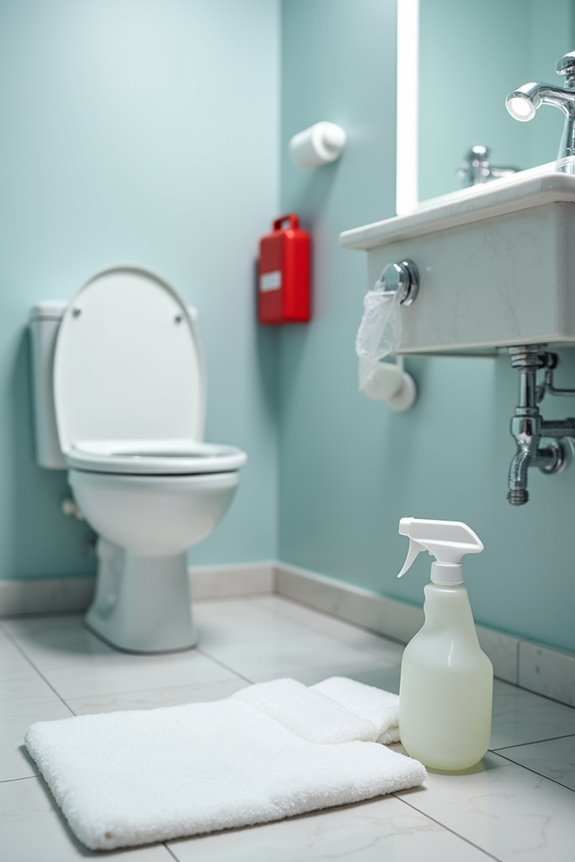
If accidents happen again, I know it’s frustrating, but the good news is that quick action really does make a difference in stopping odors before they settle in. You’ll want to blot up the excess liquid immediately, then rinse with warm water and apply an enzymatic cleaner that targets uric acid crystals—the actual culprit behind that stubborn smell. By ventilating the area right away and staying consistent with your treatment routine, you’re setting yourself up to catch problems early instead of letting them become bigger headaches down the road.
Immediate Cleanup Steps
When urine hits your bathroom floor or fixtures, speed matters—the faster you act, the less the smell’ll settle in.
Here’s what I do when accidents happen:
- Blot or wipe immediately – Use paper towels or cloth to remove fresh urine, then rinse the area with clean water to dilute residue
- Apply an odor-eliminating product – Saturate the spot with solutions like Odorcide, following label directions (typically 8 oz per gallon)
- Target porous surfaces – Mix baking soda paste, apply to stains, then spray with equal parts vinegar and water after brushing
Don’t skip the surrounding areas. I clean grout, caulk, and under toilet rims thoroughly with hot water and mild cleaner—odors hide there. The urine smell won’t vanish overnight, so reassess after treatment. If it lingers, repeat the process and consider resealing around your toilet to prevent future problems.
Prevent Future Odor Buildup
Quick-Response System
I’ve learned that creating a bathroom emergency kit helps. Keep baking soda, vinegar, and paper towels accessible under the sink. When accidents happen, you’ll grab what you need immediately instead of scrambling.
Regular Maintenance
Check your toilet seal and caulk quarterly. Worn components silently harbor urine smells, making odor elimination nearly impossible later. Replace them before they become problems.
Strategic Inspections
Walk around your bathroom monthly, checking grout lines and the toilet base. These spots trap moisture and odors. A quick 50/50 vinegar-water spray on suspicious areas prevents buildup before it starts, keeping your space fresher longer.
When To Reapply Treatment
When To Reapply Treatment
Despite your best preventive efforts, accidents happen—and that’s exactly when you’ll need to know whether one cleaning cycle is enough or if you’re facing a tougher situation.
Here’s when I recommend reapplying treatment:
- Odor returns within days – This signals incomplete odor elimination; saturate the area with 8 oz of Odorcide per gallon of cleaning solution and air dry completely.
- Strong smells linger after initial cleaning – Repeat treatment on absorbent surfaces like mats and hard-to-reach spots under toilet rims and caulk lines.
- Old urine stains remain visible – Deeply embedded uric acid crystals often need multiple applications to fully neutralize bacteria.
After retreating, grab a black light and reassess your bathroom. You’ll spot remaining hotspots clearly, letting you target newly exposed odor sources with precision.