Solid wood actually reflects most sound—about 65–85% bounces right back off it. That’s why your living room sounds echoey with just wooden furniture.
But the point is: add perforations and backing materials like mineral wool behind the wood, and you’ve completely changed it. Those holes let sound travel into absorbent cavities, turning dense reflectors into genuine absorbers with NRC ratings reaching 0.65–1.0. The backing material does most of the heavy work, not the wood itself.
The Short Answer: Does Wood Actually Absorb Sound?
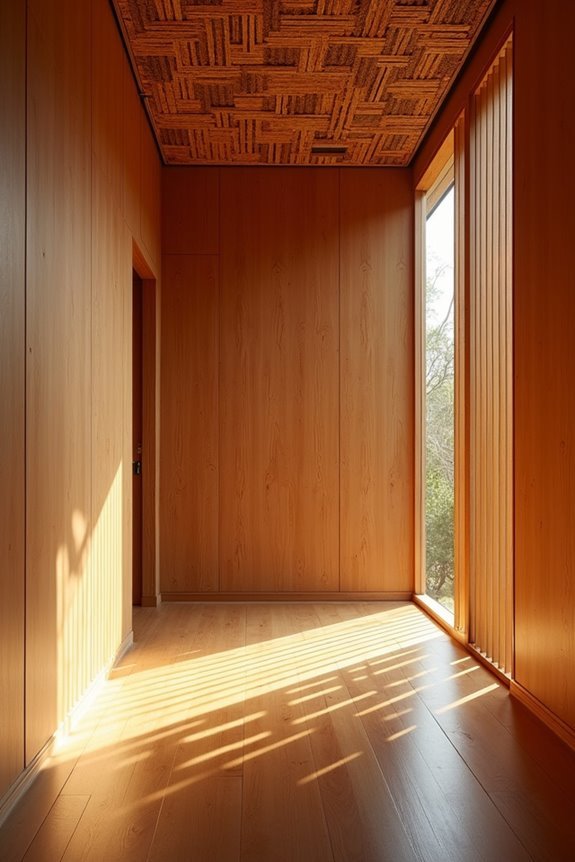
solid wood doesn’t absorb much sound at all. I used to think my wooden bookshelf would quiet my noisy room, but it barely made a dent. That’s because solid, non-perforated wood only absorbs about 5–15% of sound energy, giving it an NRC (noise reduction coefficient) of roughly 0.05–0.15.
However, perforated panels work differently. When I added backing material like mineral wool behind perforated wood, the sound absorption increased significantly. These structures work across a broad frequency range, not just one specific pitch. The air gap and backing material let sound penetrate deeper, making perforated wood 3–5 times more effective at absorbing mid-to-high frequencies than solid panels alone.

High-Quality Slatwall Panels: Crafted with high-density polyester fiber, premium medium-density fiberboard, and a solid wood veneer. This combination provides an elegant look, superior sound damping, and excellent sound deadening, significantly improving room acoustics

Modern and Elegant Design - The wood slat wall panels have been carefully designed to effortlessly transform any space, enhancing the surroundings both visually and acoustically. The wood panels help to create an environment that is not only quiet but beautifully contemporary, soothing and relaxing. Furthermore, our slat wall panels can be installed horizontally or vertically and cut to any shape allowing for creativity and a unique look to fit your aesthetics.

Modern and Elegant Design - The wood slat wall panels have been carefully designed to effortlessly transform any space, enhancing the surroundings both visually and acoustically. The wood panels help to create an environment that is not only quiet but beautifully contemporary, soothing and relaxing. Furthermore, our slat wall panels can be installed horizontally or vertically and cut to any shape allowing for creativity and a unique look to fit your aesthetics.
Why Solid Wood Reflects Sound (And Doesn’t Absorb It)
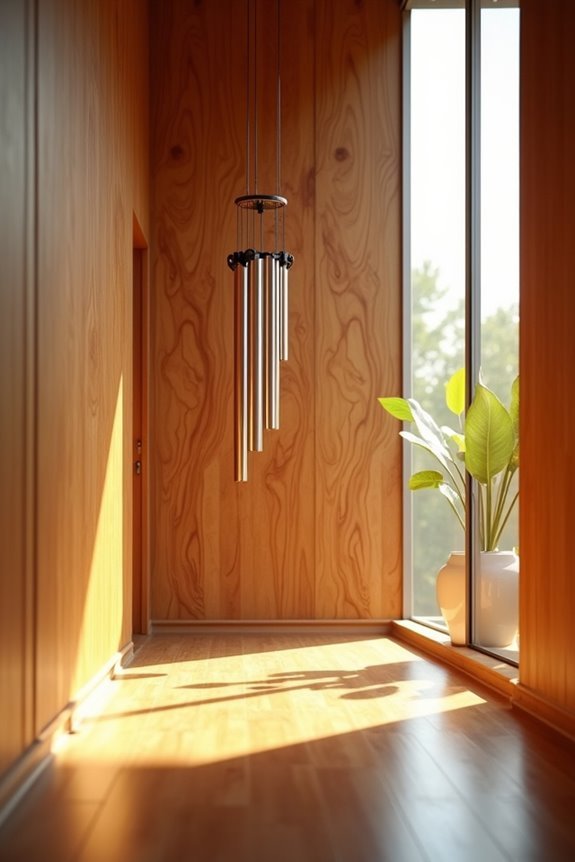
The Reflection Problem
Here’s the thing: solid wood reflects about 65–85% of incident sound energy. Its high density and smooth, closed surface create a hard barrier that bounces sound waves right back into your room rather than absorbing them. Think of it like throwing a ball against a wall—it comes right back at you.
Without perforations or acoustic backing, sound energy can’t penetrate deep enough to convert into heat. That’s why solid wood contributes to reverberation instead of reducing it. You’ll need those strategic modifications to address sound absorption effectively.
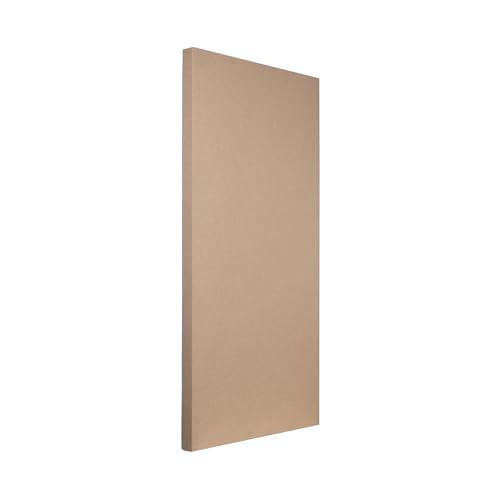
Panel size is 24" x 48" x 2" and mounts flush to wall

Panel size is 24" x 48" x 2" and mounts flush to wall

High NRC Rated Core .95 or higher avg.
How Wood Density Affects Sound Absorption
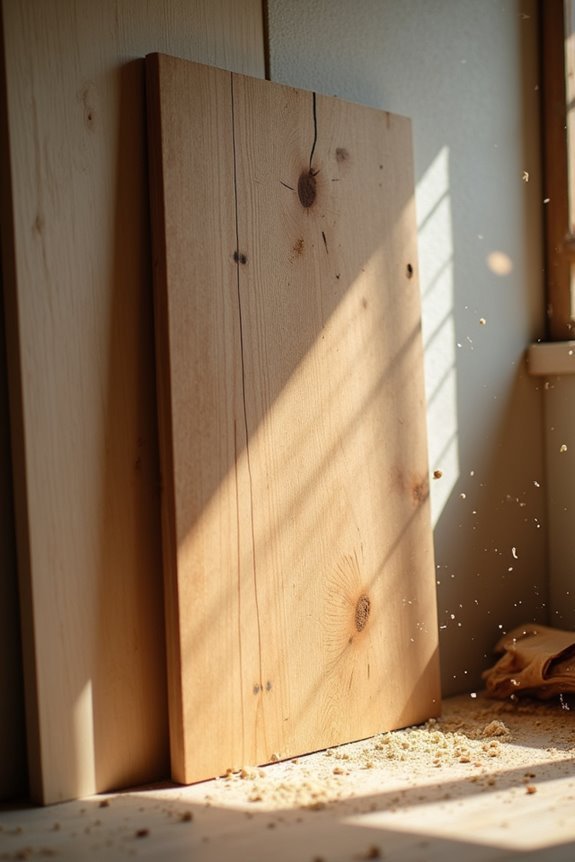
I’ve found that a wood’s density—how tightly packed its fibers are—directly determines how much sound it’ll bounce back rather than soak up, which is why that solid oak door reflects noise like a mirror while softer woods perform only marginally better. Hardwoods like maple and oak are particularly reflective culprits, bouncing back 85–95% of sound energy, whereas softwoods absorb slightly more, though still disappointingly little on their own. Here’s what changes the outcome: when you add perforations or slot those dense panels over backing materials like mineral wool, you’re overriding the density limitation, pushing absorption rates from a mere 5–15% (NRC) all the way up to 0.65–1.05.

High-Quality Wall Panels: Our acoustic panel set is crafted with high-density polyester fiber, premium medium-density fiberboard, and a solid wood veneer. This combination provides an elegant look, superior sound damping, and excellent sound deadening, significantly improving room acoustics

High NRC Rated Core .95 or higher avg.

High NRC Rated Core .95 or higher avg.
Density And Sound Reflection
When you’ve got a thick, heavy piece of oak flooring versus a lighter pine board, you’re looking at two very different sound behaviors—and it all comes down to density. Dense hardwoods reflect 85–95% of incident sound energy, while solid non-perforated panels reflect 65–85%, absorbing only 15–35%. This reflection difference matters because denser wood bounces sound around your room longer, creating reverberation.
| Wood Type | Density | Reflection Rate | Absorption |
|---|---|---|---|
| Oak | High | 90–95% | 5–10% |
| Maple | High | 85–95% | 5–15% |
| Pine | Low | 70–80% | 20–30% |
| Plywood | Medium | 75–85% | 15–25% |
Here’s what changes everything: perforated wood panels. When you introduce holes or gaps, sound travels through to backing material and cavity depth behind the wood—turning your dense reflector into an absorber. Wood density still matters structurally, but absorption now depends on what’s behind it, not the wood alone.
Hardwood Versus Softwood Performance
Why does that solid oak bookshelf in your living room boom with sound while a pine closet feels quieter? The answer lies in density. Dense hardwoods like oak and maple reflect 85–95% of sound energy back into the room, absorbing only 5–15% (NRC around 0.05–0.15). Softer woods such as pine and cedar, being less dense, absorb slightly more sound but still remain predominantly reflective.
What changes the equation: perforated panels with backing. Add mineral wool or fiberglass behind perforated hardwood, and you’ll significantly boost absorption to NRC 0.65–1.05. That backing fills the gaps where sound waves get trapped instead of bouncing around. Softwoods need less intervention, but both wood types perform acoustically well when engineered thoughtfully—not when left solid and bare.
Perforations Override Density Limitations
Solid wood’s density problem—that tendency to bounce sound right back at you—disappears the moment you drill holes in it. I’ve found that perforated wood panels achieve what solid wood can’t: NRC values reaching 0.65–1.0+, compared to solid wood’s modest 0.15–0.35. Here’s why it works: those perforations let sound travel through to absorptive backing materials like mineral wool or fiberglass. The cavity depth behind the holes becomes your real absorption engine, not the wood’s density itself.
Think of it this way—density now handles structural strength while perforations handle sound control. A typical 18–25 mm panel with proper backing turns dense hardwood from a sound reflector into an effective absorber. We’re circumventing nature’s limitation by engineering the system strategically.
Perforations and Air Gaps: The Key to Wood Sound Absorption
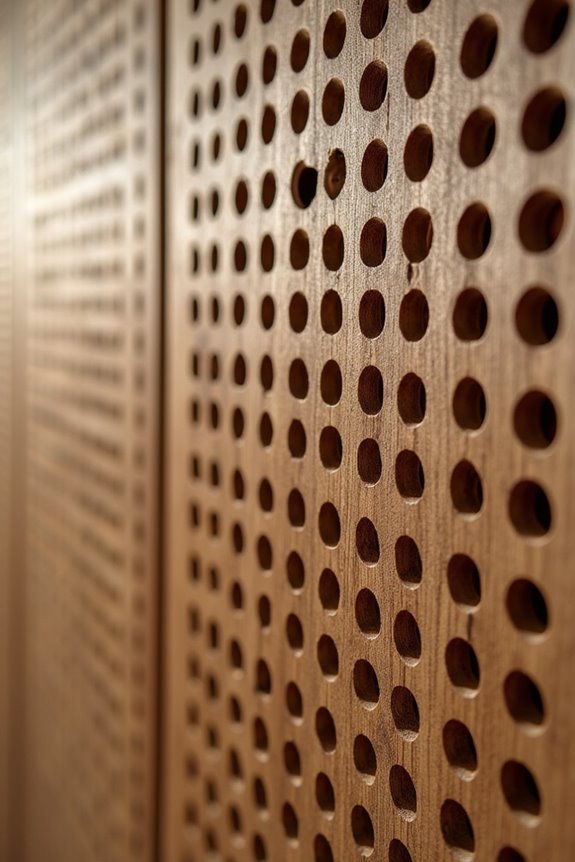
How do you turn a solid wooden panel into an effective acoustic absorber? You add perforations and air gaps. Here’s what works: those tiny holes are functional design elements—they enable real acoustic absorption. When sound hits perforated natural wood, it passes through to a backing absorber instead of bouncing back. The resonant absorption occurs in that air cavity behind the perforations, targeting specific frequencies. Your NRC rating increases because the combination of hole size, open area percentage, and cavity depth work together. The wood maintains its visual appearance while channeling sound energy to be absorbed rather than reflected.
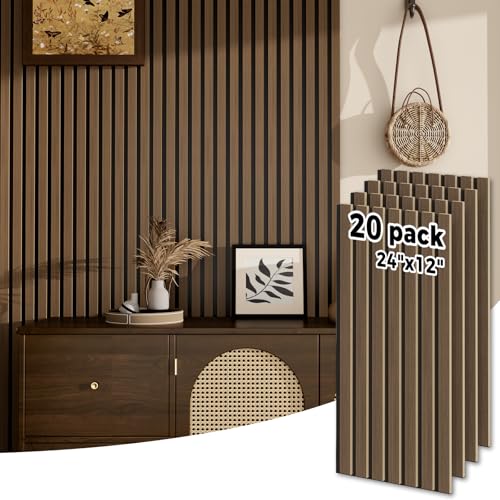
【Lightweight & 1-Person Easy Installation】: Lightweight 24" x 12" wood slat wall panels are easy for 1 person to handle and install while maintaining reliable stability. The convenient 20-pack design allows flexible installation for feature walls or small spaces with less waste. Panels can also be easily trimmed for a custom fit.

Superior Acoustic Performance--Crafted from high-density polyester fiber, these groove-patterned panels are engineered for superior sound absorption. The linear channels help trap and diffuse sound more effectively, reducing echo and enhancing acoustic clarity across larger surface areas.

🔇 Efficient Noise Reduction: Designed for tranquility, our acoustic wall panels feature a high NRC rating of 0.95, effectively absorbing both high and low-frequency sound waves. They minimize echoes and reverberation, creating a calm and focused environment—like adding a solid soundproof barrier to your space. The more panels you connect, the stronger the noise reduction effect.
Solid vs. Perforated: Which Wood Actually Absorbs?
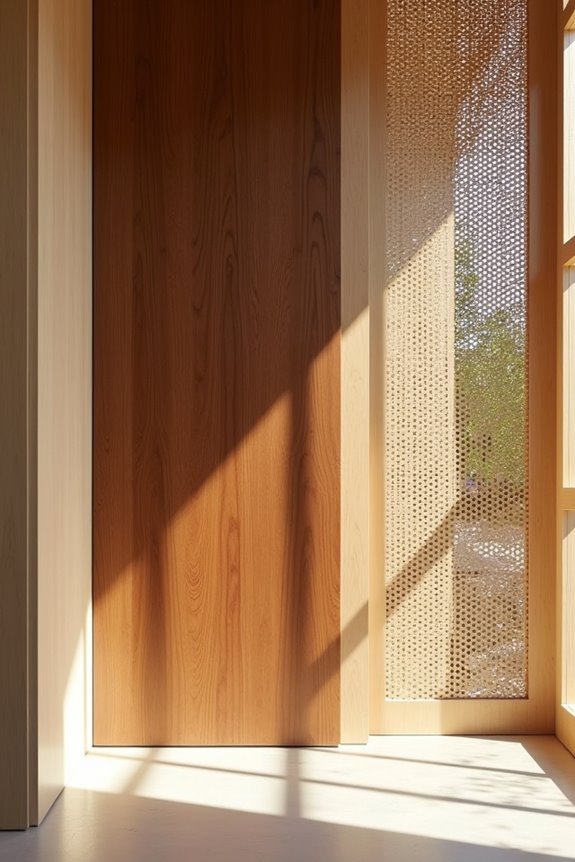
The difference between solid wood and perforated wood when it comes to sound absorption is significant—and it affects how you’d design an acoustic space.
Here’s what actually happens:
- Solid wood reflects 65–85% of sound energy back into your room, absorbing only 5–15% (NRC 0.05–0.15)
- Perforated panels channel sound through holes into backing materials like mineral wool, achieving NRC ratings of 0.65–1.05
- Air cavities behind perforated wood extend absorption into lower frequencies you’d otherwise miss
- Sound reflections drop significantly when backing materials trap energy instead of bouncing it around
If you’re serious about controlling acoustics, perforated wood panels with proper backing materials are fundamentally different performers than solid sheets.

APPLICATIONS: These bass traps, made of perforated wood and acoustic foam, are excellent for low and mid frequencies. For optimal results, they are installed in corners between walls, or at the intersection of a wall and ceiling. Most commonly used in: Recording studios, home theaters, music rooms, office spaces, rehearsal rooms, auditoriums, conference rooms, cafeterias, hotels, bedrooms, churches, game rooms, podcast rooms, etc.

High NRC Rated Core .95 or higher avg.

High NRC Rated Core .95 or higher avg.
What’s Actually Absorbing: The Role of Backing Materials
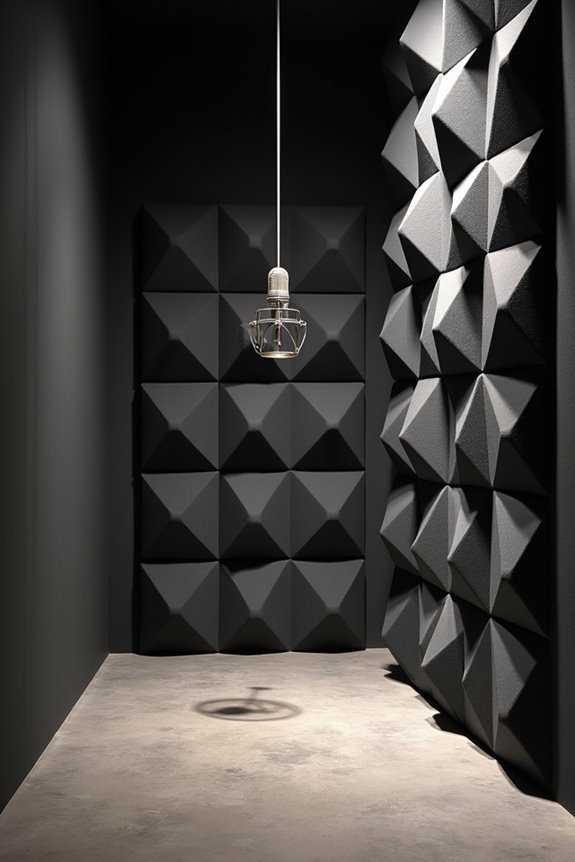
When you install perforated wood panels, you’re really relying on what’s behind them—the backing materials like fiberglass or mineral wool—to do the heavy lifting of absorbing sound energy and converting it into heat. I learned this the hard way when I treated my home studio with solid wood and wondered why it didn’t quiet things down, only to realize that the air cavity depth and backing material type matter far more than the wood’s surface itself. Let me show you how different backing materials perform and why the space behind your panels is your most effective tool.

Modern and Elegant Design - The wood slat wall panels have been carefully designed to effortlessly transform any space, enhancing the surroundings both visually and acoustically. The wood panels help to create an environment that is not only quiet but beautifully contemporary, soothing and relaxing. Furthermore, our slat wall panels can be installed horizontally or vertically and cut to any shape allowing for creativity and a unique look to fit your aesthetics.

【Superior Sound Dampening】Art3d wood wall panels are engineered to significantly minimize noise levels in any setting. Crafted from high-density polyester fiber, these panels absorb sound waves, enhancing acoustics and fostering a more serene and comfortable environment

Superior Acoustic Performance — Welcome an unparalleled auditory experience with our sound proof panels for walls. Designed for superior noise-cancellation, these slat wall paneling redefine acoustic excellence. Our wood wall panels are tailored for a variety of settings, including homes, offices, and studios. Avana walnut oak wood slat wall panel creates an acoustically balanced environment, enhancing sound clarity. Experience functionality and style with our fluted wall panels.
Backing Material Performance Hierarchy
Ever wonder why a perforated wood panel sitting alone in your room doesn’t absorb much sound, but suddenly becomes effective once you add material behind it? Here’s the hierarchy that determines which backing materials actually work:
- Mineral wool (NRC +0.45 to +0.75) – Your top performer, especially for low-frequency absorption
- Fiberglass (NRC +0.40 to +0.65) – A solid, reliable choice that handles mid and high frequencies well
- Acoustic fleece (NRC +0.20 to +0.40) – Budget option with significantly weaker performance than the others
- Air cavity depth – Shallow (25–50 mm) targets higher frequencies; deep (150–300 mm) captures bass
The wood itself doesn’t absorb sound—it’s merely the vehicle. Your backing material converts acoustic energy into heat, which is where the real performance occurs.
Air Cavity Depth Impact
Why does adding more space behind your perforated wood panel change its function from a decorative wall covering into an actual sound absorber?
The answer lies in air cavity depth. I’ve found that shallow cavities (25–50 mm) give you decent absorption with an NRC around 0.65–0.80, but deeper cavities (150–300 mm) deliver better results: NRC ratings exceeding 1.0 for low-frequency absorption.
Here’s what happens: deeper air spaces create resonant absorption at target frequencies. Sound waves enter through perforations, travel into that cavity space, and interact with your backing material—whether mineral wool or fiberglass—dissipating energy as heat. The cavity depth thresholds matter tremendously; more space means better energy dissipation and broadband performance. You’re building an acoustic trap that catches sound before it bounces back.
Do Different Wood Species Absorb Better? (Spoiler: Backing Matters More)
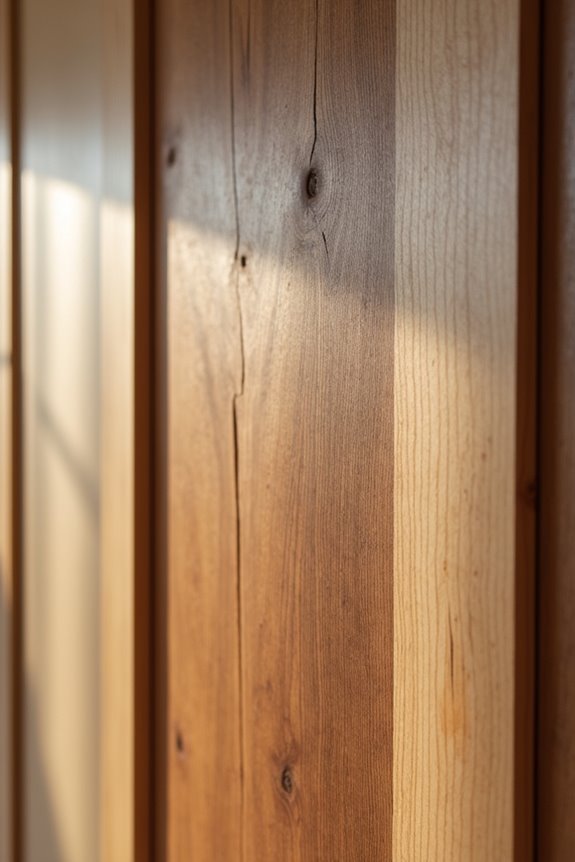
the type of wood you choose matters far less than you’d think.
- Solid wood absorbs poorly — oak, pine, or walnut all perform similarly around NRC 0.15–0.35
- Perforated panels dramatically outperform — reaching NRC 0.65–1.05 through backing material, not species
- Backing material dominates results — mineral wool outperforms fiberglass for low-frequency absorption
- Modern systems combine slats with felt — achieving NRC up to 0.9–1.0 regardless of wood type
Backing material and perforation design drive acoustic performance, while wood species primarily affect aesthetics. When selecting panels, focus on the acoustic backing behind them. That’s where the real sound-absorbing power lives. Your wood choice lets you match your space’s look—that’s valuable—but the engineering happens behind the scenes.

High NRC Rated Core .95 or higher avg.

Large capacity durable set: The copper wool set includes 2 copper sponges, each copper wool weighing 7 ounces. The 2-piece set provides double the amount, with a thick, substantial feel for enhanced durability, easily handling multiple polishing tasks.
Decoding NRC and STC Ratings
If you’ve ever shopped for acoustic panels online, you’ve probably spotted mysterious abbreviations like “NRC 0.75” or “STC 30” and wondered what they actually mean.
NRC measures how well a material *absorbs* sound—higher numbers mean better absorption. Perforated wood panels with backing material typically score 0.65–1.05, while solid wood panels score only 0.15–0.35. That backing matters because it addresses low-frequency absorption, particularly mineral wool, which outperforms fiberglass in this category.
STC is different entirely. It rates how effectively a partition *blocks* sound traveling between rooms, not surface absorption.
Understanding this distinction helps you choose correctly. Need to absorb sound in your current space? Focus on NRC ratings and backing materials. Want to prevent sound leaking between rooms? STC’s your metric.

【SPECIFICATION】: High Density - 200kg/m3; Dimensions - 16 X 12 X 0.4 inches(cutting tolerance: 2%), pack of 6, covering 7.7 square feet; Weight - 2.8 pounds of 6 pieces; Material - Polyester Fiber

High NRC Rated Core .95 or higher avg.

BEST VALUE less than $9.00 per Sq. foot.
When Should You Use Wood for Absorption vs. Reflection?
solid wood and perforated wood aren’t interchangeable regarding sound control—they do nearly opposite jobs.
I’ll break down when you’d choose each:
- Use solid wood for reflection when you’re designing concert halls or performance spaces where sound distribution matters; dense hardwoods like oak reflect 85–95% of energy.
- Choose perforated wood panels with backing materials for absorption-focused rooms; they reach NRC ratings up to 1.0 by channeling sound into mineral wool or fiberglass.
- Combine strategies in multipurpose spaces; mix reflective solid panels with perforated sections to balance acoustics naturally.
- Prioritize broadband absorption by pairing perforated wood (0.4–10 mm holes) with air cavities behind them, converting sound energy into heat rather than bouncing it around your room.

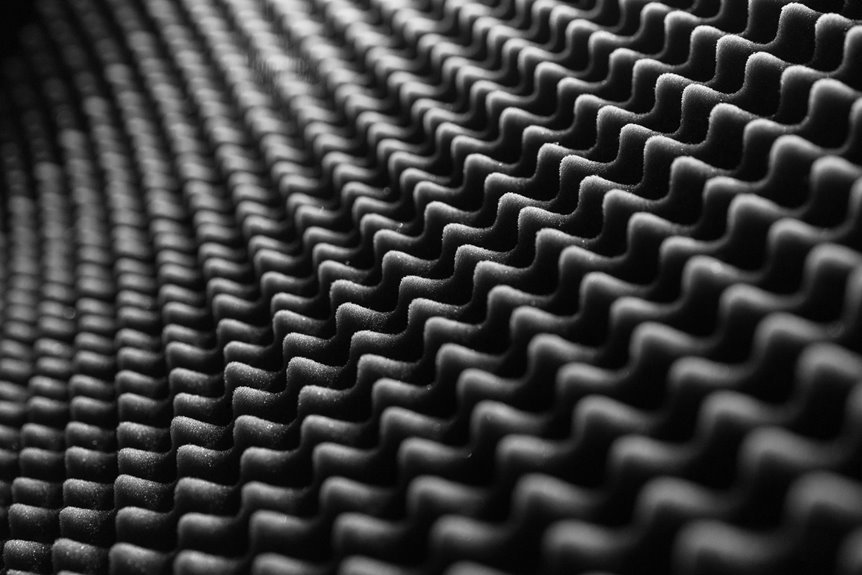
Superior Acoustic Treatment: These sound-absorbing foam panels effectively dampen echoes and reverberations for enhanced audio clarity and quality

Dual-Layer Reinforced Structure: With a double-layer thickened absorption material, effectively disperse echo and noise. Each panel measures 47.2 x 23.6 x 0.72 inches, providing a superior experience compared to single-layer panels
Tailoring Wood Panels to Your Space: Offices, Studios, and Living Rooms
How can you pick the right wood panels when you’re working with a specific room—say, your home office, music studio, or living room?
I’ve found that perforated panels with backing material work well for most spaces. They’ll give you an NRC around 0.70–0.90, meaning they absorb most sound while keeping that warm wood aesthetic you want.
Here’s what I recommend:
- Home offices: Mix perforated panels (focused on speech frequencies) with solid wood accents
- Studios: Prioritize deeper backing—25–300 mm cavities improve low-frequency absorption
- Living rooms: Balance reflection and absorption to avoid dead acoustics
The key? Match your timber construction depth to your room’s dimensions. This tailored approach to room acoustics lets you control sound without losing character.

High NRC Rated Core .95 or higher avg. Broadband Bass Absorber

High NRC Rated Core .95 or higher avg. Broadband Bass Absorber

High NRC Rated Core .95 or higher avg. Broadband Bass Absorber
Calculating Coverage and Panel Placement
I’ve found that hitting the right coverage percentage provides meaningful results. Here’s what I’d recommend:
- Aim for 20-30% wall surface absorption as your baseline—it’s practical and noticeably improves reverberation without overdoing it
- Target first reflection points where sound bounces directly to your ears, like behind desks or opposite walls
- Use perforated panels strategically, balancing 60-70% perforated coverage with 30-40% non-perforated sections for visual appeal
- Check your NRC rating to verify your panels match your space’s acoustic needs
Start with trial placement using a spirit level. Panels join side-by-side easily, so you can adjust your layout as you listen and learn what works best for your room.
Designing Your Wood Acoustic System
Now that you’ve figured out where your panels go, I’ll help you pick the right materials and depths so your wood system absorbs the frequencies that bother you most. The backing you choose—whether it’s mineral wool, fiberglass, or dense felt—affects how sound gets trapped, and the air space behind your panels controls which frequencies get absorbed best. Let’s work through selecting materials and optimizing that cavity depth so your acoustic setup handles everything from booming bass to sharp treble.
Selecting Materials And Backing
- Backing materials like mineral wool and fiberglass boost your NRC (noise reduction coefficient) significantly, adding 0.40–0.75 depending on which you choose
- Air cavity depth matters: shallow spaces (25–50 mm) tackle high frequencies, while deeper cavities (150–300 mm) excel at low frequencies
- Perforated wood panels paired with quality backing create the absorption you need—micro-perforations (0.4–2 mm) deliver NRC around 0.75–0.95
- Acoustic fleece offers lighter installation but lower performance (NRC 0.20–0.40), so consider your space’s demands
Your backing choice determines whether you’re controlling whispers or taming bass rumble.
Optimizing Cavity Depth Performance
You’ve picked your backing material—mineral wool, fiberglass, or acoustic fleece—but here’s what I’ve learned: the empty space behind your wood panel is where meaningful acoustic performance happens.
Cavity depth directly controls your acoustic performance. Shallow cavities (25–50 mm) target mid-to-high frequencies above 500 Hz, while deeper ones (150–300 mm) address low-frequency absorption where bass problems live. I’ve found that matching cavity depth with your perforation characteristics—hole size, density, and pattern—lets you tune exactly what frequencies you’re treating.
The numbers matter. Deep cavities often yield NRC ratings exceeding 1.0, meaning superior absorption across your space. However, structural considerations and fire ratings require validation before installation.
Start modest if you’re unsure. You’ll quickly identify which cavity depth solves your room’s specific acoustic challenges.