First, I’d pick the right sealer—spray-on works great for detailed pieces, while brush-on handles flat surfaces better.
Next, apply 2–3 coats, waiting 1–2 hours between each and sanding lightly with 220-grit sandpaper to smooth the surface.
Finally, avoid touching your work; let it cure fully for 24–48 hours before handling anything.
These fundamentals protect against moisture and UV damage, though real mastery comes from understanding what happens during those critical curing hours.
Choose the Right Sealer for Your Project
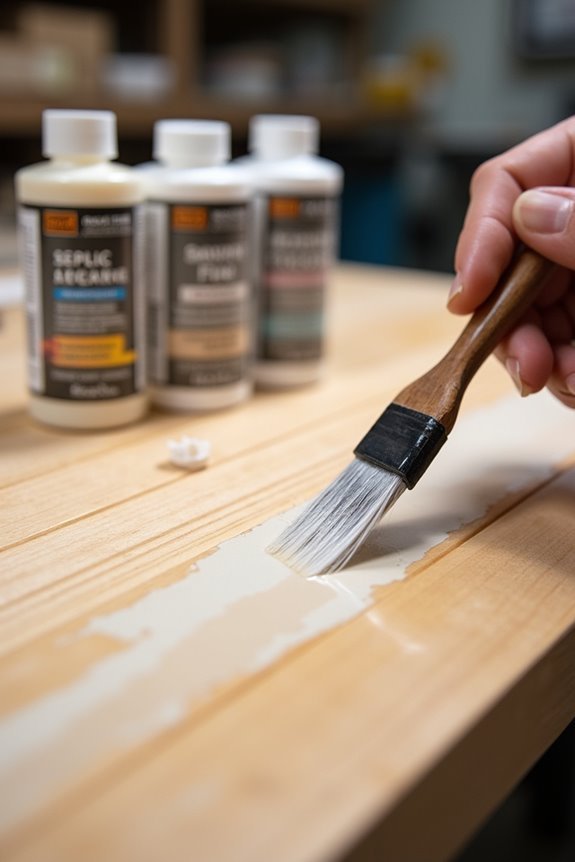
How do you know which sealer will actually protect your painted wood without ruining the look you’ve worked hard to create?
Selecting the right sealer depends on your specific project. For detailed work and small parts, spray-on options handle intricate areas well. For large flat surfaces, brush-on sealers work effectively and offer better outdoor durability.
Spray-on sealers excel for detailed work, while brush-on options provide superior durability on large flat surfaces.
Consider your environment too. If your piece faces sun exposure, choose UV-resistant options like exterior polyurethane or weatherproof sealants. Water-based polycrylic offers versatility—it dries clearer with minimal yellowing compared to oil-based alternatives.
Best practice: test on scrap wood first. This lets you compare gloss finish options (matte, semi-gloss, high-gloss) and confirm the final appearance before sealing your main piece.
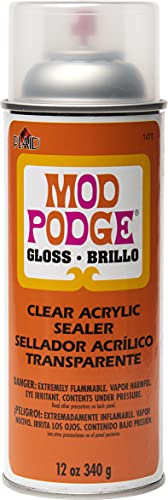
CONVENIENT SIZE - This 12 oz clear acrylic sealer is a must-have to your art supplies

Acrylic sealer spray provide a protective, clear finish

Voted America’s Favorite Crafting Glue by generations of crafters, hobbyists, and households
Apply Sealer Coats and Sand Between Layers
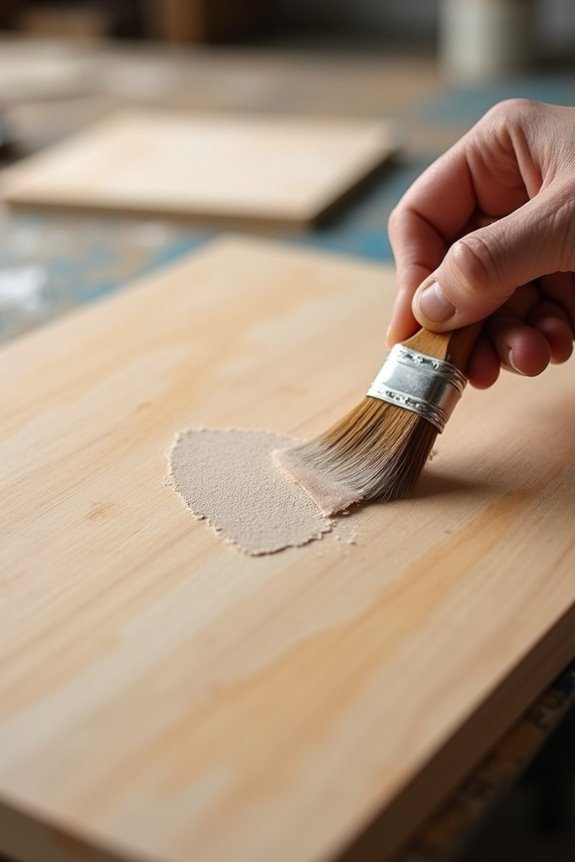
Once your acrylic paint’s completely dry—usually after 1–2 hours—you’re ready to apply that first sealer coat. This waiting period is important; rushing it undermines your finish. Apply your sealer evenly across the wood surface, following the label’s instructions for drying time between applications.
Lightly sand between each coat using 220–400 grit sandpaper. This smooths any grain the sealer raised, creating a smoother gloss layer. Wipe away all dust with a tack cloth before applying the next coat—this prevents particles from disrupting your finish.
Plan for 2–3 total coats for solid protection, or add an extra coat if your project faces outdoor conditions or heavy use. Finally, let everything cure fully for 24–48 hours before handling.

Protects indoor wood surfaces such as furniture, windows, cabinets, trim and more

PROTECT WOOD SURFACES – Minwax Polyurethane Wood Finish protects interior projects like woodwork, furniture, floors and cabinets. The oil-based, clear top coat is one of the most durable coatings for wood protection against scratches, spills and more.

PROTECT WOOD SURFACES – Minwax Polyurethane Wood Finish protects interior projects like woodwork, furniture, floors and cabinets. The oil-based, clear top coat is one of the most durable coatings for wood protection against scratches, spills and more.
Wait for Full Curing Before Handling
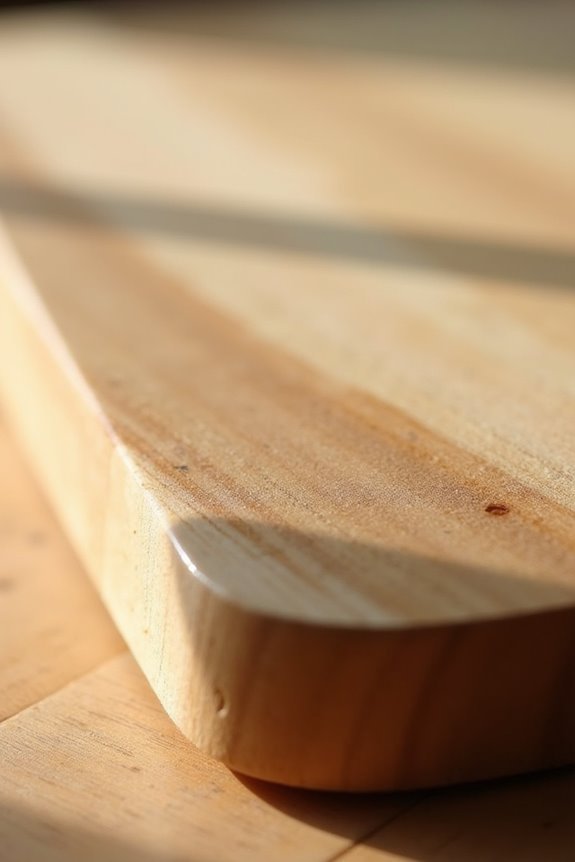
Why does waiting matter so much after you’ve already applied all those sealer coats? Here’s the thing: your wood project isn’t actually protected yet, even though the acrylic paint feels dry to the touch. I’ve learned this the hard way by touching my work too soon.
Your sealant needs time to fully harden and bond with your acrylic paint. This protection phase requires patience:
- Dry-to-the-touch happens fast—usually 1–2 hours between coats
- Full cure requires 24–48 hours minimum after your final coat before safe handling
- Complete curing extends 2–3 weeks, during which dust, humidity, or contact damages the sealer
- Environmental factors matter—heat and poor ventilation extend curing times beyond label recommendations
Avoid placing objects on your sealed wood until that full cure finishes. Premature handling risks indentations, color changes, and compromised protection. Wait it out.

WATER-BASED WOOD FINISH: Our sealant provides top-notch protection against wear and tear in high traffic areas. It's odorless and suitable for use on wood siding, log homes, swing sets, outdoor furniture, wooden deck and fence, and more

MARINE SEALANT: Our liquid formula creates a UV-stable coating for protection against the elements, saltwater spray, and water damage. Marine is a protector for outdoor decks, thermally modified wood, and boat docks. Marine is safe for use over open water and is non-hazardous to aquatic life. ** This product is NOT intended for hardwoods such as ipe, mahogany and teak. **
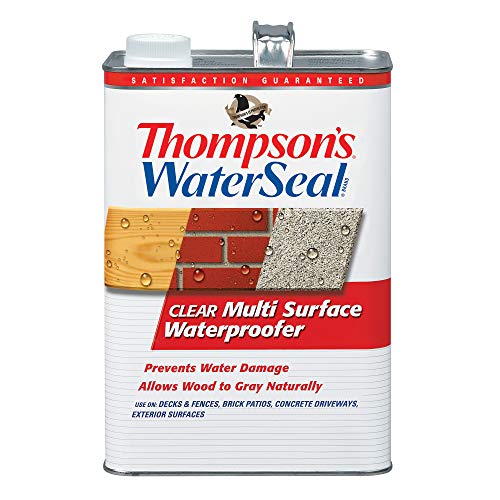
WATERPROOFING STAIN – Bring out the beauty of your outdoors with Thompson’s WaterSeal Clear Multi-Purpose Waterproof Stain. Proven to waterproof concrete, brick, exterior wood and other exterior surfaces.