
Adding a basement bathroom breaks down into three phases.
First, check local codes and sketch your layout with proper headroom (7 feet minimum) and fixture placement.
Second, waterproof everything—install moisture barriers like Dricore blocks and Kerdi board to protect against seepage.
Third, position your vanity, toilet, and shower, connecting PEX lines and adding adequate ventilation.
Get a contractor’s confirmation before starting; it prevents expensive mistakes down the line.
Step 1: Assess Feasibility and Plan Your Basement Bathroom Layout
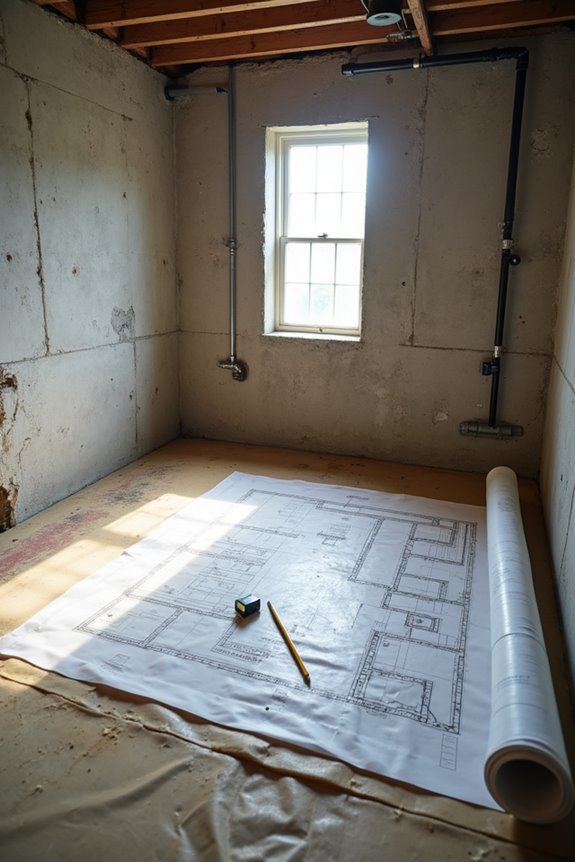
How do you know if your basement can actually handle a bathroom? Start by checking your local code requirements—they’re non-negotiable. I’d measure your headroom clearance first; you’ll need at least 7 feet, preferably 7 feet 6 inches for comfort.
Next, evaluate your basement feasibility by identifying existing plumbing proximity. Placing your bathroom near current water lines saves thousands in remodeling costs. Sketch your bathroom layout on graph paper, marking fixture positions and door swings—toilets need space, sinks require clearance.
Check egress standards; most codes demand a window or second exit. Finally, consult permit requirements in your area before breaking ground. A professional contractor can confirm everything’s workable, preventing costly mistakes and allowing your bathroom to function properly from day one.

Fewer Seams, Faster Install: The waterproofing membrane measures 3.77 ft X 33 ft. The Total spread area is 125 square feet, which is WIDER than the traditional 3.3 ft X 33 ft (108 sq), Less cutting and taping means quicker coverage for your bathroom or basement

✅Strongly Waterproof: With excellent waterproof performance, the seam tape prevents moisture from permeating your shower wall, dry wall, tiles, curb, niche, pan, flooring, and any other surfaces that need to be waterproof.

Step 2: Protect Against Moisture: Subfloor and Waterproofing
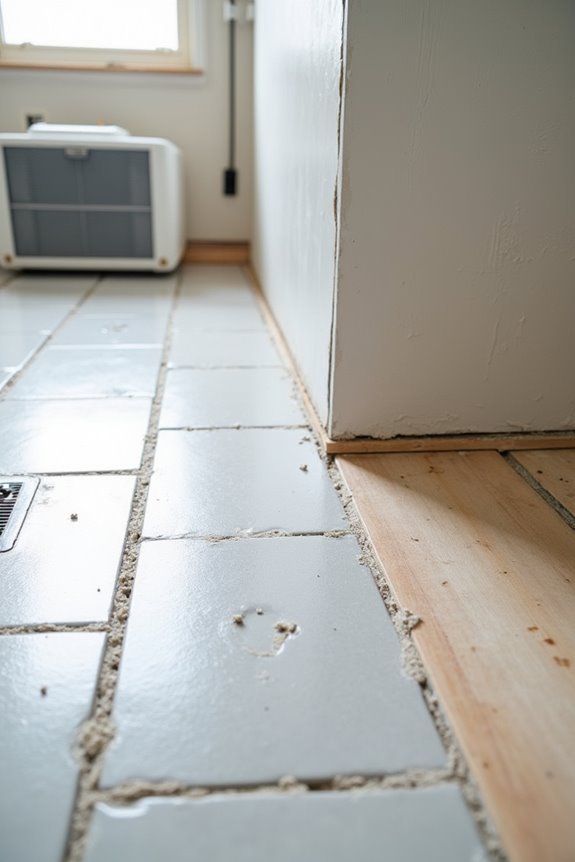
Once you’ve confirmed your basement can handle a bathroom and sketched out where everything goes, you’ll want to address the biggest threat to your new space: moisture.
I recommend starting with Dricore interlocking blocks. These elevated subfloor components sit directly on your concrete slab, creating a raised moisture barrier that keeps your bathroom dry and warm. This preparation step matters—a lot.
| Component | Purpose | Material | Benefit |
|---|---|---|---|
| Dricore blocks | Elevation | Interlocking plastic | Reduces cold transfer |
| Moisture barrier | Protection | Sealed membrane | Prevents slab seepage |
| Waterproofing | Finishing layer | Kerdi board | Stops water intrusion |
| Subflooring | Base support | Water-resistant composite | Supports fixtures safely |
Plan this foundation work before installing walls or fixtures. You’re building a stable, moisture-resistant base that’ll handle your tub, shower, and tile installations with confidence. This groundwork protects everything you’ll add later.

Powerful Airflow: Delivers strong airflow up to 130 CFM, efficiently enhancing ventilation and removing exhaust; Ideal for grow tents, greenhouses, basements, bathrooms, kitchens, attics, and workshops

Durable Fan Material: Constructed from reinforced and corrosion-resistant metal for long-lasting reliability; The fan has a strong motor which features a permanently lubricated bearing that operates quietly and requires no maintenance

Shutter Exhaust Fan: This 6-inch shutter exhaust built with sturdy ABS frame body, high quality motor, high quality ABS thick plastic blades and front panel for durable use
Step 3: Install Fixtures, Finishes, and Ventilation Systems
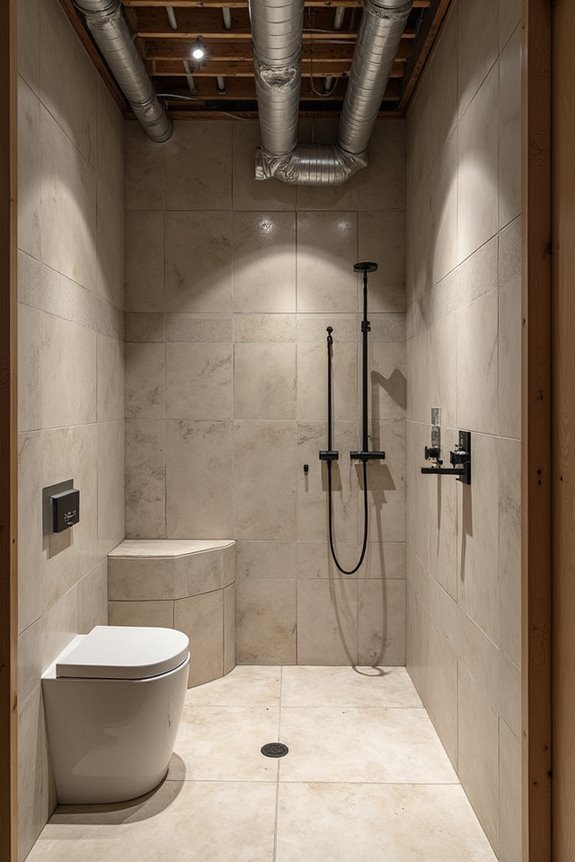
With your moisture-resistant foundation in place, you’re ready to install the fixtures, finishes, and ventilation that’ll make your basement bathroom functional and comfortable.
With your moisture-resistant foundation in place, you’re ready to install the fixtures, finishes, and ventilation for your basement bathroom.
Installing Your Basement Bathroom Fixtures
Start by positioning the vanity, toilet, and tub/shower unit into the prepared rough-in, aligning everything with your PEX water connections and waste lines. Next comes the frameless glass shower door—secure the brackets directly to studs, checking clearances carefully to prevent moisture seepage.
Consider these essentials:
- Connect fixtures to finished plumbing, coordinating with your plumber
- Install moisture-rated electrical fixtures like lighting and towel hooks
- Verify your ventilation system vents outdoors with adequate CFM
Proper ventilation prevents moisture buildup and protects your investment long-term.

LONG SERVICE LIFE: High quality lead-free brass, resists corrosion, rust, mineral buildup and high temperature(32℉-200℉)


Package Includes: 1/2"Pushfit elbow (2 pcs)