
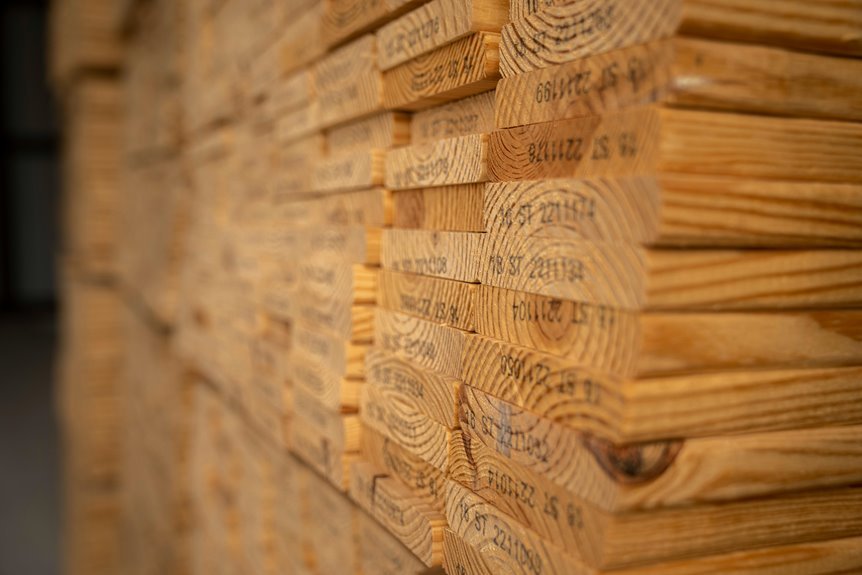
A rick of wood measures 4 feet tall by 8 feet wide, but its depth—and total volume—depends entirely on your log length. With 16-inch logs, you’re looking at roughly 42.7 cubic feet per rick. Longer logs like 24-inch ones create deeper stacks, approaching half a cord. Three 16-inch ricks equal one full cord of 128 cubic feet, making log length important when comparing prices or planning storage space.
What Is a Rick of Wood?
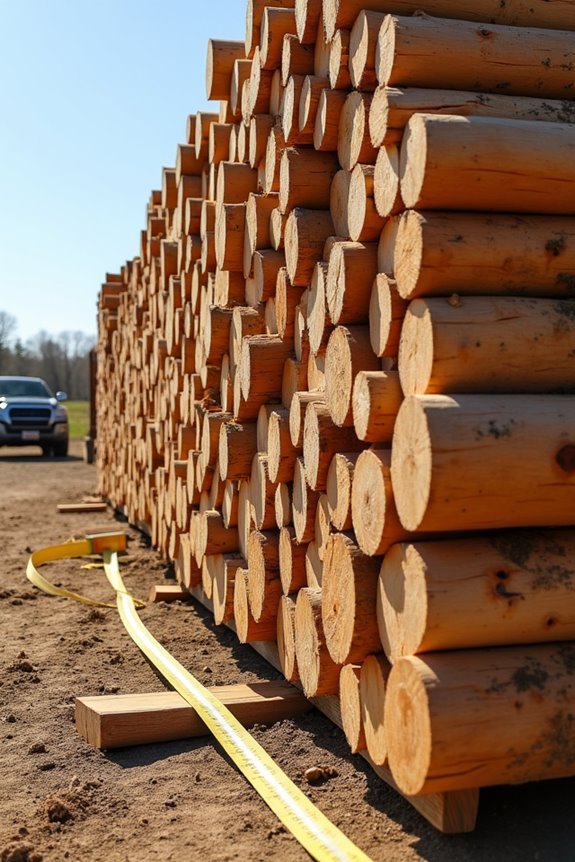
Ever wonder why folks talk about “ricks” and “face cords” like they’re the same thing? Well, they basically are. A rick is simply a regional way of describing stacked wood, and it’s a term you’ll hear in different parts of the country—sometimes called a rank or rack, depending on where you live.
Here’s what makes a rick: it measures 4 feet by 8 feet across its face, with a depth that depends on your 16 inches log length. That consistent front dimension defines it. Three ricks stacked together equal one full cord, which contains 128 cubic feet of wood. It’s not an exact volume measurement since depth varies, but it’s practical for how most folks actually stack and sell firewood.

| 8 Feet Firewood Rack Cover | - Measures 96" x 24" x 49" (L x W x H), Zettum 600D firewood rack cover is designed to fit firewood rack holders up to 8 ft. Universal fit most 8 foot firewood racks and firewood racks with length under 8ft. Please measure your firewood rack carefully. ( Note: Cover Only, Wood Rack Holder NOT INCLUDED!! )

Comprehensive Weather Protection:With dimensions of 96'' x 24'' x 46'', this cover is tailored for 4-foot firewood racks, delivering all-weather protection to keep your firewood and rack dry and dust-free in any season.

| 4 Feet Firewood Rack Cover | - Measures 48" x 24" x 49" (L x W x H), Zettum 600D firewood rack cover is designed to fit firewood rack holders up to 4 ft. Universal fit most 4 foot firewood racks and firewood racks with length under 4ft. Please measure your firewood rack carefully. ( Note: Cover Only, Wood Rack Holder NOT INCLUDED!! )
Standard Rick Dimensions and Depth Variations
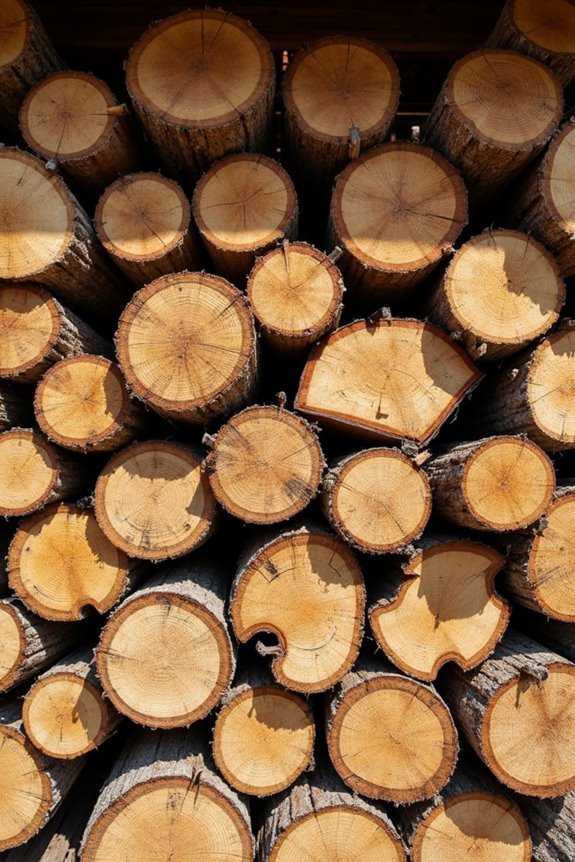
Now that you understand what a rick is, I want to show you how its actual size shifts depending on what you’re stacking. The height and length stay put at 4 feet tall by 8 feet long, but here’s where it gets interesting: the depth—that’s the third dimension—changes based on how long your logs are. If you’re working with 16-inch logs (the most common size), your rick will be shallower than if you’re stacking 24-inch logs, which means you’re looking at different volumes of wood even though the front face looks the same.

1. NO ASSEMBLY REQUIRED & INSTANT FOLDING Skip the hassle of screws and tools. This small firewood rack arrives fully assembled—simply unfold it in seconds to create a sturdy U-shape. Ideal as a portable firewood holder indoor that stores flat when not in use, making it perfect for efficient space management in apartments or RVs.
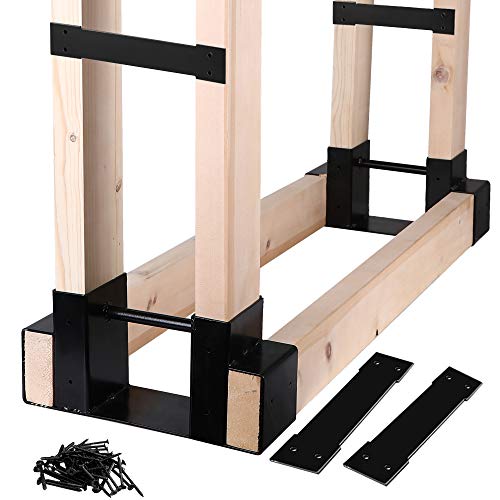
WHAT YOU GET -- A pair of firewood log brackets with wood screws,13.2" *3.7"*6". (Lumbers are not included).

UNRIVALED ACCURACY: Manufactured with meticulous attention to detail, the Mingo Firewood Marker guarantees precise firewood measurements, ensuring you have the right amount for any task.
Height and Length Consistency
Why does one person’s rick look different from another’s, even when they’re both called the same thing? The answer lies in understanding what stays consistent and what shifts. A standard rick maintains a rock-solid height of 4 feet and length of 8 feet—these measurements rarely change across regions. However, the depth varies considerably based on log length, which directly affects your delivered volume. When you’re buying wood, the log length determines everything. Sixteen-inch logs create a shallower rick, while 24-inch logs add significant depth. This variation means you might receive anywhere from one-third to one-half cord, depending on local practices. Always ask about the specific log length before purchasing, so you know exactly what volume you’re getting for your money.
Log Length Impact on Depth
The depth of your rick—that’s the measurement going back from the front of the stack—is directly determined by your log length. With standard 16-inch logs, you’re looking at roughly 16 inches of depth, creating a face cord around 42.7 cubic feet. But stretch those logs to 24 inches, and your rick deepens considerably, approaching nearly half a cord in volume. This variation matters because it affects how much wood you’re actually getting. Shorter logs mean shallower ricks; longer logs mean deeper ones. Understanding this relationship helps you accurately gauge your wood supply and stack more efficiently for your needs.
How Does a Rick Compare to a Full Cord?
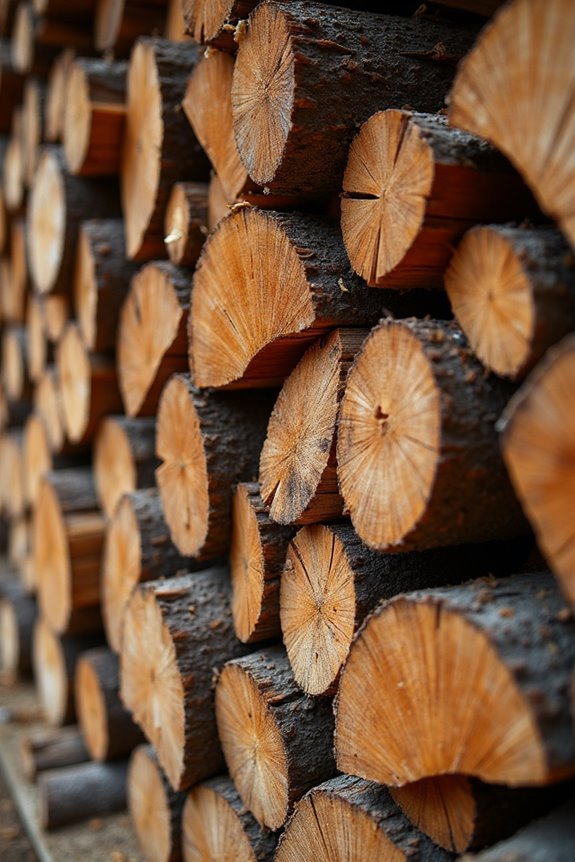
If you’re wondering how a rick stacks up against a full cord, here’s the straightforward comparison: a rick—also called a face cord—is considerably smaller than its full-cord cousin.
Here’s what you need to know:
- A rick measures 4 feet by 8 feet with 16-inch logs, totaling roughly 42.7 cubic feet
- A full cord contains 128 cubic feet of stacked wood, bark, and air
- Three ricks with 16-inch logs equal approximately one full cord
- Understanding this relationship helps you purchase exactly what you need without overspending
When you’re shopping for firewood, knowing these distinctions matters. A single rick won’t heat your home all winter—you’ll likely need multiple ricks or a full cord to stay warm through colder months.

Great for Any Occasion: Whether you're having a party, enjoying a quiet night in, or cooking up a storm for your family and friends, our cooking wood is sure to make your event memorable

Great for Any Occasion: Whether you're having a party, enjoying a quiet night in, or cooking up a storm for your family and friends, our cooking wood is sure to make your event memorable

Premium Quality Firewood: Our kiln-dried firewood logs are perfect for any use, whether you need oak firewood, birch firewood, or cherry firewood. Delivered straight to your door, these logs are ideal for fireplaces, fire pits, and wood stoves.
How Log Length Changes a Rick’s Volume
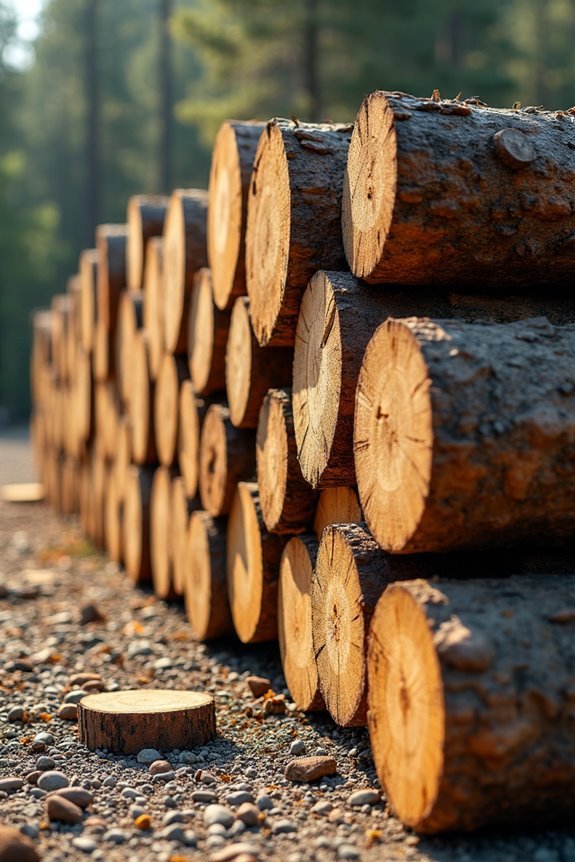
I’ve discovered that the log length you’re buying makes a significant difference in how much wood you’re actually getting in a rick. When you’re shopping for 16-inch logs versus 24-inch logs, the conversion ratios shift dramatically—what counts as one rick in one situation might equal something entirely different in another. Understanding these variations helps you avoid overpaying or underestimating how much firewood you’ll need for the season.

Large Storage Space: The firewood rack stores 1/2 cord of firewood and bears 661.3 lbs/300KG. Dimensions: 102" x 14.2" x 46.1", fits on porch, garden, deck, under eaves, terrace, yard, etc.

[Hand-Woven Natural Materials] These natural woven roman shades are made of bamboo and other natural materials which are woven on hand. Your woven natural roman shade is made with materials harvested from nature. Each harvest of natural fibers is unique and will have variations in color, grain, texture, and striations.

TRUE BLACKOUT ROMAN SHADES - Say goodbye to unwanted light with these new blackout roman shade that combines practicality with flair. Featuring a luxurious Linen-like expression and a classic flat roman shade style, they come in a variety of custom sizes, colours for a perfect fit.
Standard 16-Inch Logs
How does cutting your firewood into different lengths actually change how much you’re getting?
When I first learned about rick measurements, I realized that 16-inch logs are the industry standard for a reason. A single rick of 16-inch logs measures 4 feet high by 8 feet long, with a depth matching the log length. This gives you approximately 42.7 cubic feet per rick.
Here’s what matters most:
- You’ll need exactly 3 ricks to equal one full cord (128 cubic feet)
- One rick provides roughly one-third of a complete cord’s volume
- Standard measurements provide consistent firewood pricing across dealers
- You know precisely what you’re purchasing for your heating needs
Understanding this face cord calculation helps you budget accurately and join informed buyers who speak the language of firewood measurement confidently.
Extended 24-Inch Logs
When you step up to 24-inch logs instead of the standard 16-inch ones, you’re not just getting longer pieces—you’re increasing how much wood that rick actually holds.
| Log Length | Rick Height | Rick Depth | Cord Volume |
|---|---|---|---|
| 16 inches | 4 feet | 16 inches | ~0.33 cords |
| 24 inches | 4 feet | 24 inches | ~0.5 cords |
| 32 inches | 4 feet | 32 inches | ~0.67 cords |
| 48 inches | 4 feet | 48 inches | ~1 cord |
The dimensions stay consistent—still 4 feet high by 8 feet long—but that extended depth increases capacity significantly. A 24-inch log face cord reaches approximately half a full cord in volume, nearly doubling what you’d get from standard 16-inch logs. This matters when you’re planning your heating needs or calculating delivery quantities. Always verify your supplier’s stated log length before committing.
Conversion Ratios Matter
The math behind wood volume gets clearer once you understand how log length directly shapes what you’re actually buying.
Here’s what changes your actual cubic feet:
- A 16-inch rick holds roughly 42.7 cubic feet—three ricks equal one full cord
- A 24-inch rick jumps to about 64 cubic feet—only two ricks make a cord
- Longer logs mean fewer ricks per cord, so you’re getting more wood per rick
- Misunderstanding conversion ratios costs you money and frustration
When I first bought wood, I didn’t grasp how log length affected my purchase. The conversion ratios matter because they reveal true volume. A rick of 24-inch logs isn’t simply “bigger”—it’s fundamentally different. You’re literally receiving more cubic feet. That’s why confirming log length before purchasing becomes necessary. These ratios aren’t abstract; they’re the difference between a fair deal and overpaying for cordwood.
How Many Ricks Fit in a Pickup Truck?
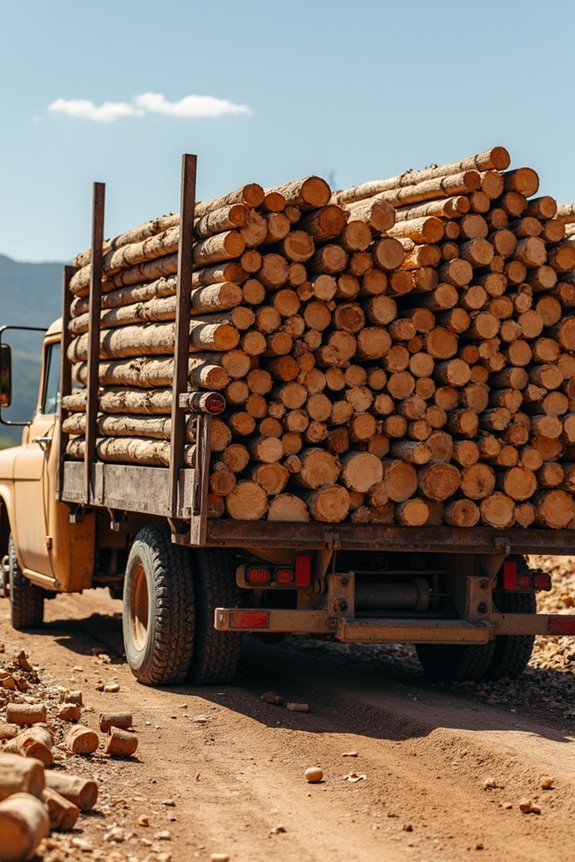
Fitting wood into your pickup truck’s bed depends on a few practical factors—mainly your truck’s bed size and how tightly you stack the logs. A standard 8-foot pickup bed typically carries one full rick of 16-inch firewood, though a 5-foot bed usually manages about half to three-quarters of a rick, depending on stacking density.
The Variables That Matter
Your success hinges on understanding your specific pickup bed dimensions and the log length you’re working with. Tightly stacked wood occupies less volume than loosely piled wood, so technique affects capacity. Most folks find that modest stacking yields reliable results without overloading the truck, keeping both the wood and your vehicle secure for the journey home.

Adjustable Length & Optimal Size:This firewood rack, measuring 96'' x 24'' x 46'', offers an adjustable length to customize your storage space. It adapts to various settings, from patios and fireplace corners to hallways, providing a flexible and efficient solution for firewood storage.

| 4 Feet Firewood Rack Cover | - Measures 48" x 24" x 49" (L x W x H), Zettum 600D firewood rack cover is designed to fit firewood rack holders up to 4 ft. Universal fit most 4 foot firewood racks and firewood racks with length under 4ft. Please measure your firewood rack carefully. ( Note: Cover Only, Wood Rack Holder NOT INCLUDED!! )

Firewood Organized: Amagabeli 8ft firewood rack measures 96" W x 12" D x 41.4" H , 4" off the ground. Heavy duty firewood rack outdoor with kinding holds and stores up 1/4 face cord of firewood. Perfect size fire wood racks to fit on outdoor back porch, back yard deck, outside backyard fire pits, under eaves, tool shed, wood shed, chaotic pile inside the cabin, indoor garage, family room, covered patio to hold enough wood for fireplace all seasons
Seasoned vs. Green: Does Rick Size Match Heating Power?
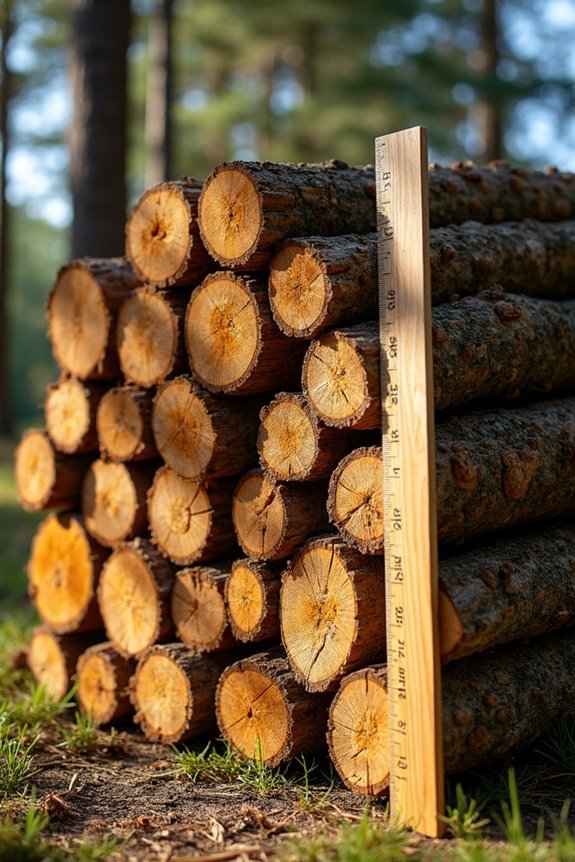
- Seasoned wood burns hot and clean—delivering real warmth that heats your home efficiently
- Green wood wastes energy—most heat escapes through smoke instead of warming your space
- A full cord of seasoned wood outperforms three ricks of green—despite identical volume measurements
- Dry wood means fewer headaches—no creosote buildup, safer fires, genuine comfort
When you buy a face cord or full cord, ask whether it’s seasoned. That log length and heating power calculation? It only works if your wood’s actually dried out. We’ve all learned this the hard way—wet wood teaches expensive lessons.

14 Support Legs -- Our 8-feet tall wood rack is constructed with heavy-duty tubular steel and features 14 sturdy legs. This design ensures exceptional stability even under heavy loads. Additionally, the rack is coated with a double layer of black powder for long-lasting use both indoors and outdoors.

【Product Specifications】- Each wood storage bracket is 13"x 3.8"x 6"(L*W*H), 5.3 lbs in weight, 13 GA (2.95mm) thick steel plate. Simply attach the brackets to 2 x 4s wood with the included screws. (2 x 4s lumbers are not included)
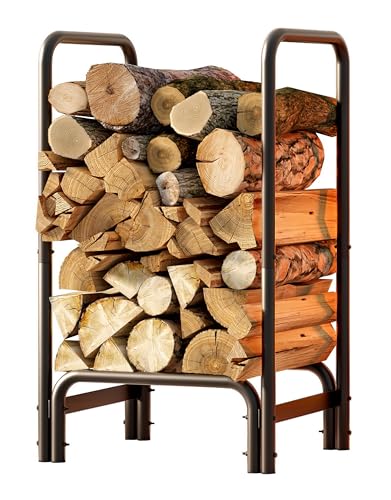
【Sturdy Metal Construction】Constructed by 25mm tubular steel material and reinforced hardware, the log storage stacker easily withstand a load of up to 400 pounds.
Rick Pricing and What Affects the Cost
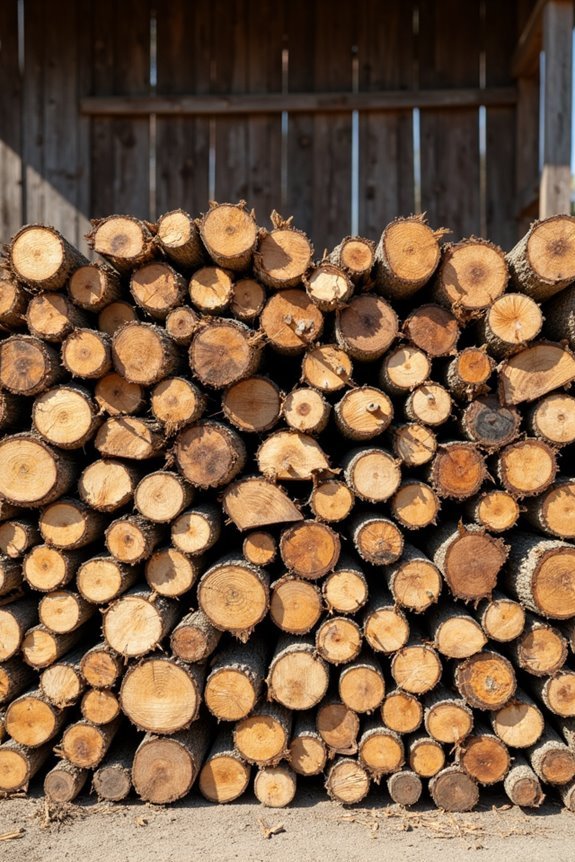
What’ll you actually pay for a rick of wood?
I’ve found that firewood pricing typically ranges from $75 to $200 per rick, depending on several factors you’ll want to consider. Hardwoods like oak or hickory command higher prices because they burn longer and hotter. The log length matters too—those standard 16-inch logs affect what counts as a full cord, which equals three ricks.
Firewood pricing ranges from $75 to $200 per rick, with hardwoods like oak commanding higher prices for longer, hotter burns.
Cost factors include:
- Wood type (hardwood costs more)
- Season (winter prices spike)
- Delivery cost (adds significantly)
- Stacking quality
I’ve learned that smaller pickups limit load capacity, sometimes requiring multiple trips. Regional variation affects pricing too, so I always verify local standards. When budgeting firewood, factor in delivery and stacking services—they’re worth the expense when you’re gathering ricks for winter heating.

Natural White Birch Logs: Crafted from natural birch wood, The logs/branches are real pieces of wood,robust and with a beautiful, natural wood texture ,not fake logs or faux logs or trick of the eyes.

100% NATURALLY SCENTED: The smell of our naturally scented fire wood is the perfect fit for the perfect flame

Kiln Dried: Our cooking wood is kiln dried to ensure that it is dry and ready to use. This process removes excess moisture and prevents the wood from cracking or splitting during burning
How Much Firewood Do You Actually Need?
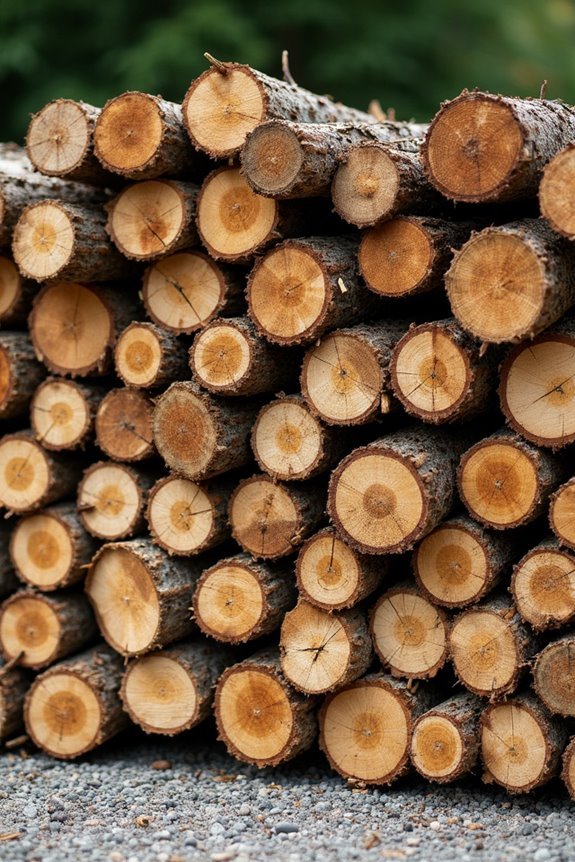
Now that you’ve got a sense of what a rick costs, you’ll want to figure out how many you actually need—because buying too little means cold nights, while too much means wasted money and storage headaches. I’ve learned that calculating your firewood needs depends on three main factors: how often you’ll use your fireplace or stove, how well your home holds heat, and what kind of winter you’re expecting. Let’s break down what goes into assessing your heating needs so you can buy with confidence.

Ample Storage Capacity: Measuring 48.03 × 12.60 × 46.46 in, this firewood rack offers generous space to hold up to 1/4 cord of firewood. It's ideal for stacking and drying large amounts of wood, suitable for porches, patios, gardens, under eaves, or backyard setups.

Braided Shade Lift Blinds Cord: come with 55 yards brown braided shade lift blinds cord roll and 4 pieces brown wood pendant, good for replacing and repairing your shades blinds and louvers

Large Storage Space: The firewood rack stores 3/4 cord of firewood and bears 881.8 lbs/400KG. Dimensions: 152" x 14.2" x 46.1", fits on porch, garden, deck, under eaves, terrace, yard, etc.
Assessing Your Heating Needs
How’ll you know if you’re stacking enough firewood to make it through winter? I’ll help you figure out your actual heating needs by considering what matters most to your situation.
- Your climate zone — harsh winters demand more fuel than mild ones
- Wood type and log length — a rick of 16-inch logs differs from 20-inch logs in heating output
- Heating duration — evening fires only versus primary heat source changes everything
- Your comfort threshold — some prefer cozy supplemental warmth, others need constant heat
If you’re burning a face cord for evening fires lasting 4–5 weeks, you’re looking at roughly 1–2 full cords per season for genuine heating. Log length drives conversion rates, so measure your setup. We’re all working with different constraints—budget, space, climate—so assess honestly what keeps your home and family comfortable.
Usage Patterns And Quantities
Once you’ve settled on your heating goals from the previous section, the real question becomes: exactly how many ricks should you actually stack?
Your usage patterns determine everything. I’ve learned that occasional fireplace users need just one face cord per heating season—roughly 43 cubic feet of wood. However, if you’re relying on wood as primary heat, you’ll want 3–5 full cords (384–640 cubic feet) through winter. The conversion matters here: three ricks equal one full cord with 16-inch logs.
| Heating Type | Season Need | Rick Count | Cubic Feet | Effort Level |
|---|---|---|---|---|
| Occasional fires | Per season | 1 face cord | 43 | Low |
| Supplemental heat | Winter | 1–2 full cords | 128–256 | Moderate |
| Primary heating | Winter | 3–5 full cords | 384–640 | High |
| Heavy use | Extended | 6+ full cords | 768+ | Very high |
| Mild climate | Season | ½ full cord | 64 | Low |
An honest assessment prevents overstocking or running short.
Stacking Methods That Maximize Your Rick’s Space
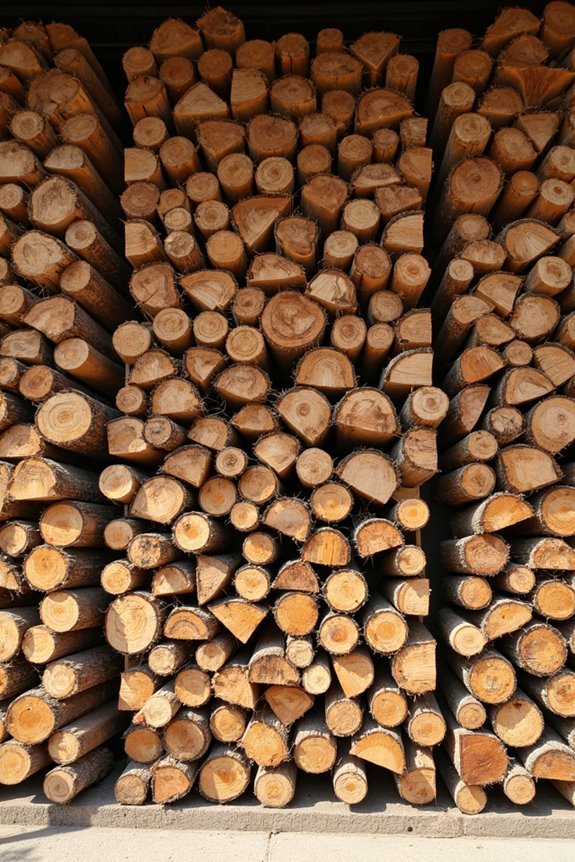
Why does one person’s rick of wood seem to hold so much more than another’s, even when they’re the same size? The answer lies in how you stack your face cord. I’ve learned that stacking method matters tremendously—it directly affects your usable volume.
Here’s what improves an ordinary rick into a space-maximizing structure:
- Create tight, uniform layers that pack logs snugly together
- Maintain even gaps between logs to promote healthy airflow
- Keep your footprint stable by stacking with intention and care
- Avoid stacking too high, which risks tipping and wasted effort
A loosely stacked rick wastes valuable space compared to a tightly packed one sharing the same footprint. I’ve found that taking time upfront to arrange logs carefully means you’ll actually fit more wood in that 4-by-8 face cord than you’d expect.
Rick Synonyms Across Regions: Rank, Rack, and Run
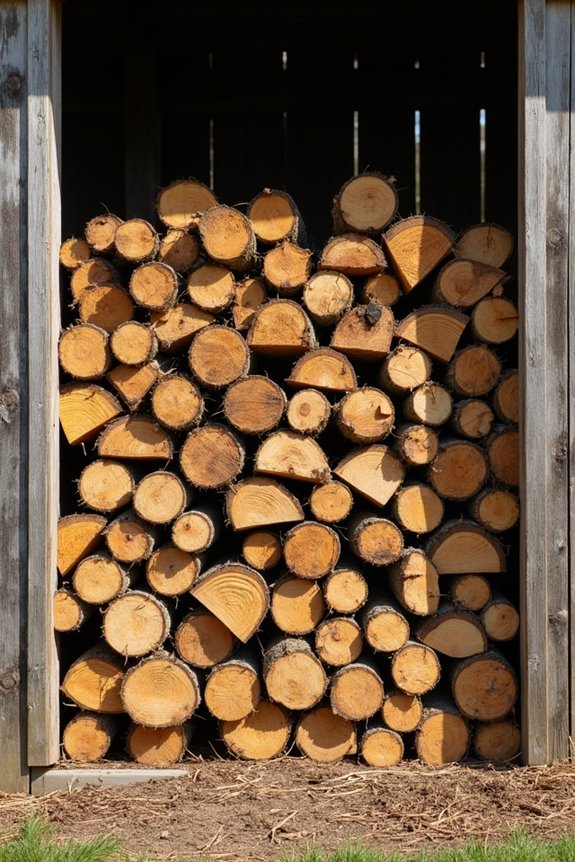
When I first started buying firewood, I noticed folks in different parts of the country called the same stack of logs by completely different names. In some regions, people use “rank” or “rack” instead of rick, while others say “run.” These synonyms all describe that standard 4-by-8-foot face cord you’re learning about. The terminology varies because wood measurement traditions developed locally, before standardization existed. Understanding regional language helps you communicate with local suppliers. When you’re shopping for firewood, knowing these synonyms prevents confusion—you’ll recognize that a “rack of 16-inch logs” means the same thing as a rick. This regional terminology reflects how communities develop their own vocabulary around shared practices, creating belonging among those who understand the local lingo.

【Product Specifications】- Each wood storage bracket is 13"x 3.8"x 6"(L*W*H), 13.5 lbs in weight, 10 GA (3.80mm) thick steel plate. Simply attach the brackets to 2 x 4s wood with the included screws. (2 x 4s lumbers are not included)
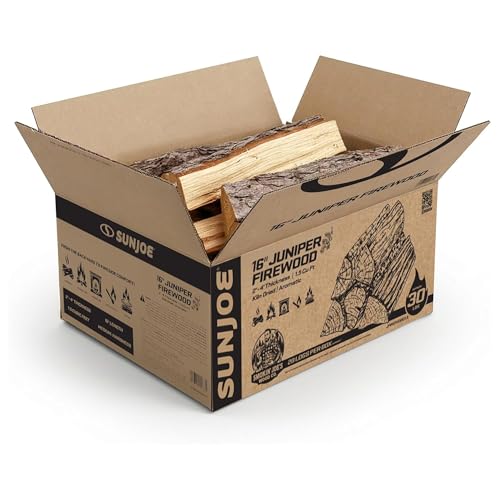
Clean-Burning Logs: Kiln-dried juniper delivers reliable heat, gentle crackle, and a naturally pleasant aroma for indoor and outdoor fires; 20 log bundle brings rustic texture and rich natural tones look great stacked by hearths or patios

Signs You’re Being Quoted a Misleading Rick Size
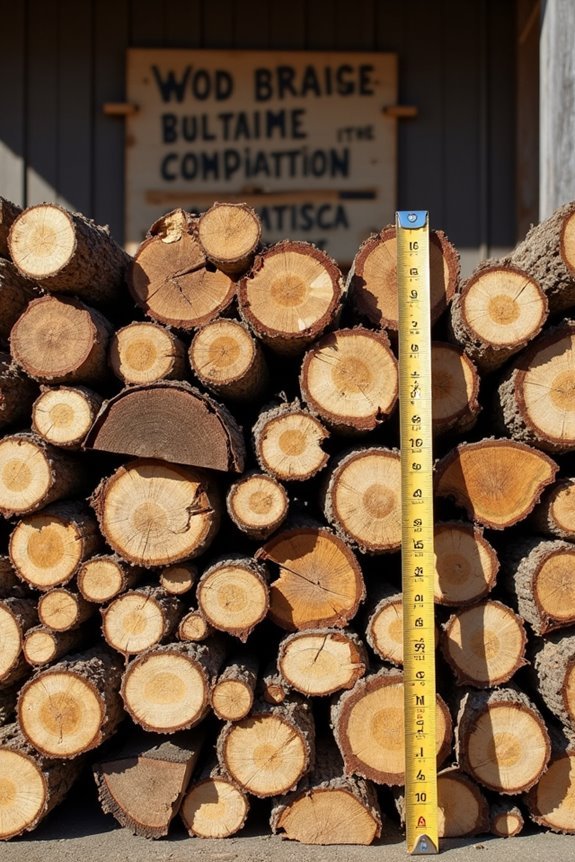
Now that you’ve got the regional lingo down, it’s time to protect yourself from sellers who exploit the rick’s fuzzy definition.
I’ve learned the hard way that vague quotes cost real money. Here’s what raises red flags:
- Sellers quoting “2x4x8” without mentioning log length—this tells you nothing about actual volume
- “Stove cord” claims that skip the face cord measurement details you need to verify
- Prices quoted per rick without specifying stacked dimensions or cord equivalents—a classic setup
- Refusing to provide written receipts listing exact measurements and cubic footage—walk away
Ask for the log length, request stack dimensions (height × width × length), and insist on cord-equivalent documentation. A trustworthy seller welcomes these questions because they’ve got nothing to hide. You’re not being difficult; you’re being smart. That rick size matters, and so does your budget.
How to Store a Rick Properly Year-Round
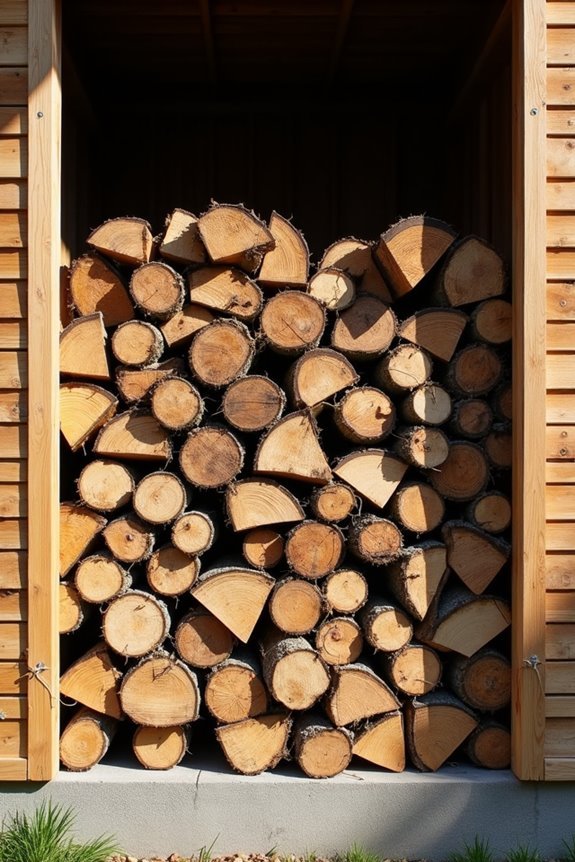
How you stack your wood matters just as much as what you’re buying. Proper rick storage requires intentional spacing and protection throughout the year. When stacking ricks, I leave gaps between each one—this promotes air circulation that prevents moisture buildup and rot. I position my stacks on level ground, never directly on soil, because that invites dampness creeping upward.
| Storage Element | Action | Benefit |
|---|---|---|
| Spacing | Leave 2-3 inches between ricks | Allows airflow |
| Elevation | Use pallets or blocks | Prevents ground moisture |
| Covering | Tarp the top only | Protects while breathing |
| Location | Choose shaded, windy spot | Reduces excess dampness |
For year-round moisture protection, I cover just the top of my stacks—not the sides. This approach maintains air circulation while shielding from rain and snow. Your wood stays seasoned, ready, and reliable.
Quick Conversion Guide: Ricks to Cords by Log Length
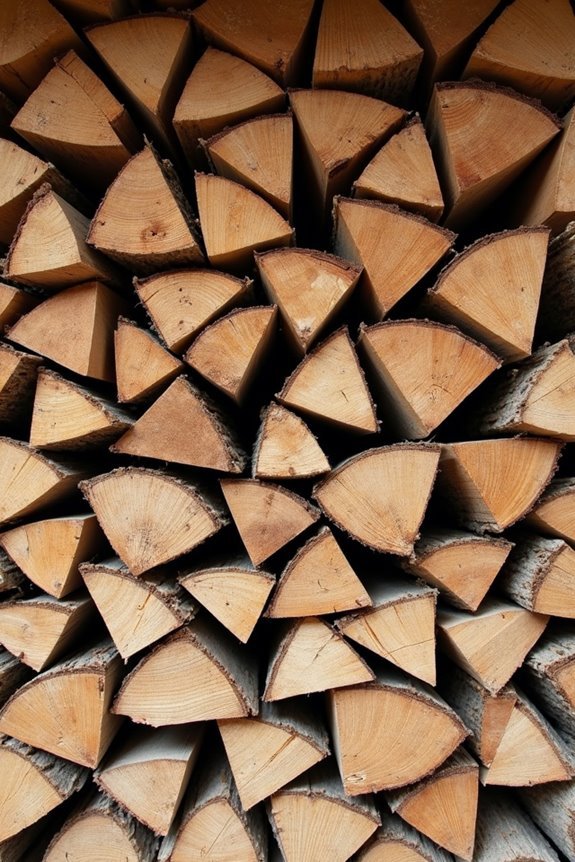
Ever wondered why your firewood dealer quotes prices differently depending on log length? The answer lies in understanding how ricks convert to full cords.
- 16-inch logs: Three ricks equal one full cord—the standard measurement
- 12-inch logs: Four ricks make one full cord—shorter pieces stack differently
- 20-inch logs: About 2.4 ricks equal one full cord—fewer pieces needed
- 24-inch logs: Two ricks fit in one full cord—nearly half-cord per rick
A rick, also called a face cord, measures 4 feet high by 8 feet long with depth matching your log length. Understanding this conversion helps you avoid overpaying for firewood. When comparing prices, ask about log length first—it’s the conversion key that protects your wallet and builds trust with your dealer.